
Insigne – Sano Modelathon 2026
Advancing Multiscale Modellin for Ischaemic Stroke
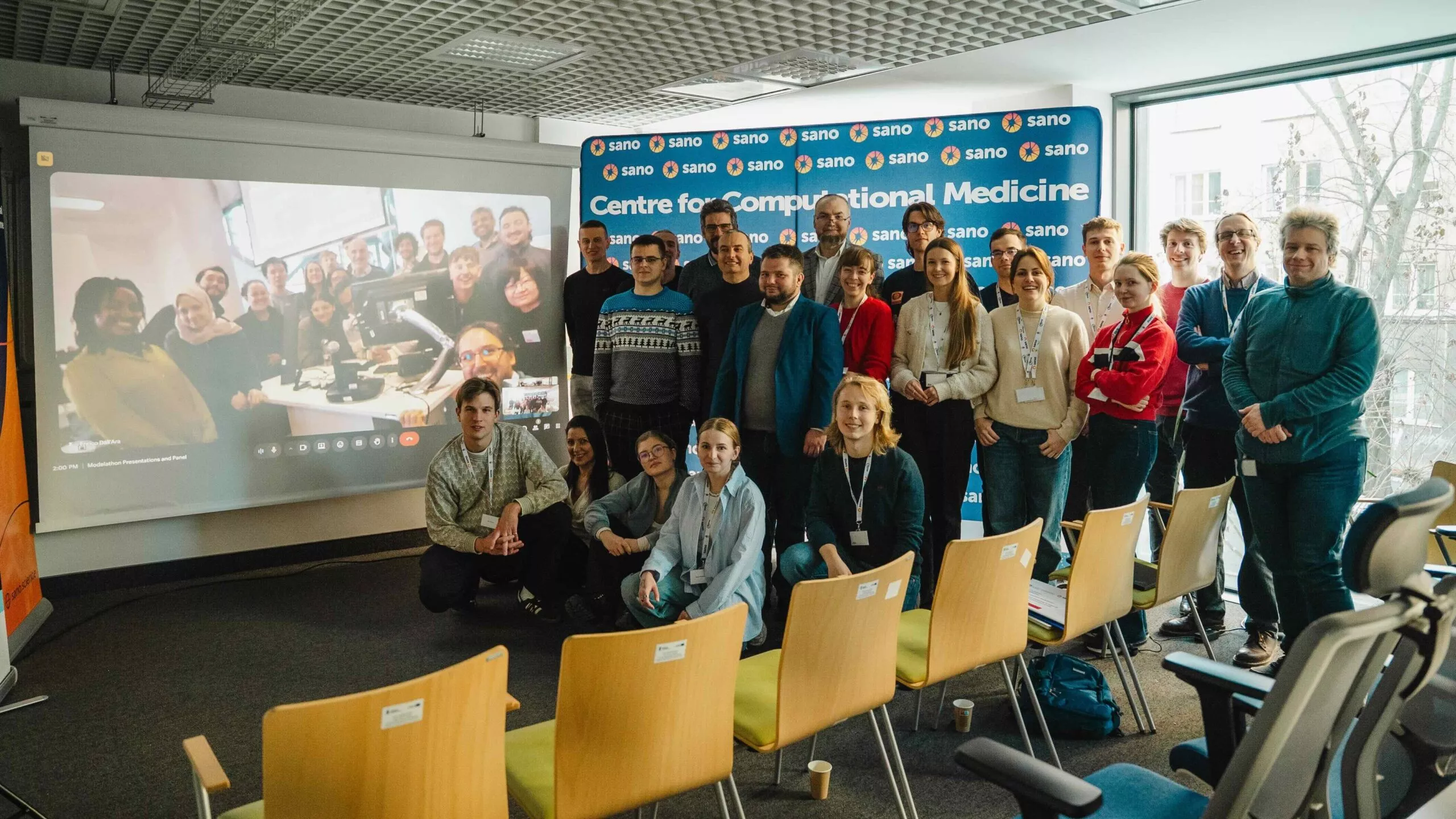
In January 2026, researchers from two leading centres — the Insigneo Institute for in silico Medicine at the Sheffield University and the Sano Centre for Computational Medicine in Kraków — joined forces to tackle one of modern medicine’s greatest challenges: ischaemic stroke. From 13–16 January, representatves of both institutions took part in the Modelathon, an intensive event combining elements of a hackathon and a scientific marathon, where interdisciplinary teams developed computational models to support the diagnosis and treatment of vascular diseases.
This year’s edition, organised in a hybrid format connecting Sheffield and Kraków, focused on the use of multiscale computational modelling — from simplified flow simulations (0D and 1D) to advanced three‑dimensional (3D) representations. The participants shared one goal: to better understand the processes taking place in the brain during stroke and to design tools that could one day assist clinicians in making critical decisions.
Day 1 – Opening and Scientific Inspiration
The Insigneo–Sano Modelathon began on Tuesday with a joint opening symposium connecting Sheffield and Kraków. Researchers and early-career scientists from both locations gathered to launch four days of intense interdisciplinary collaboration.
The event opened with a series of inspiring keynote talks delivered by:
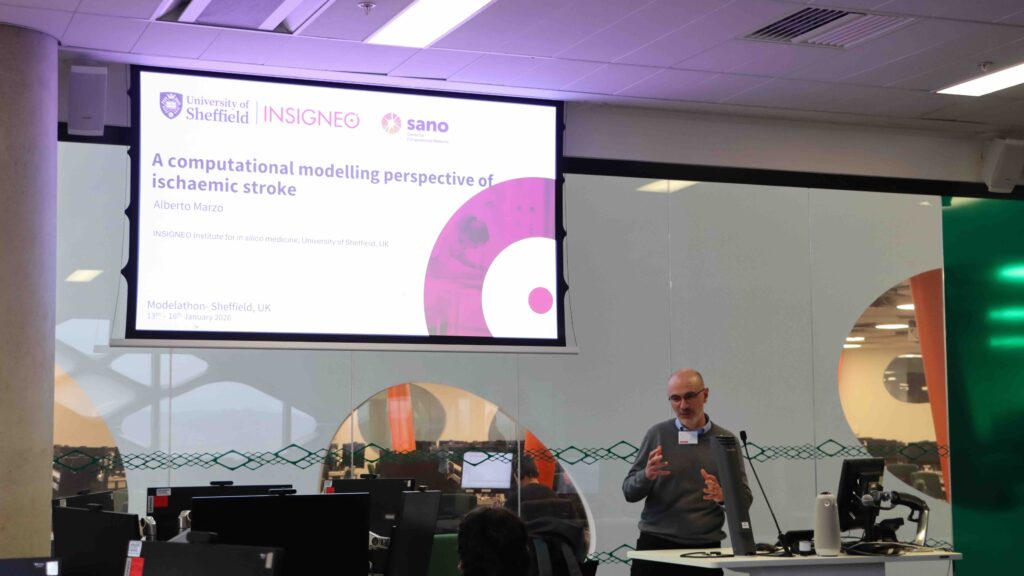
Their presentations set the stage for the days to come, offering insight into cerebrovascular anatomy, stroke mechanisms, and the growing role of computational modelling in clinical decision-making. Together, they provided the scientific and clinical context for the modelling challenges ahead.
Following the symposium, participants formed collaborative teams that brought together skills from computer science, medicine, and engineering. Each group was then introduced to the specific challenges they would address — designing and refining multiscale models to study ischaemic stroke from multiple dimensions.
Prof. Enrico Dall’Ara and Dr. Andrew Narracott served as Modelathon Leads at Sheffield, while Maciej Malawski led the event from Sano in Kraków.
Day 2 – Understanding the Circle of Willis
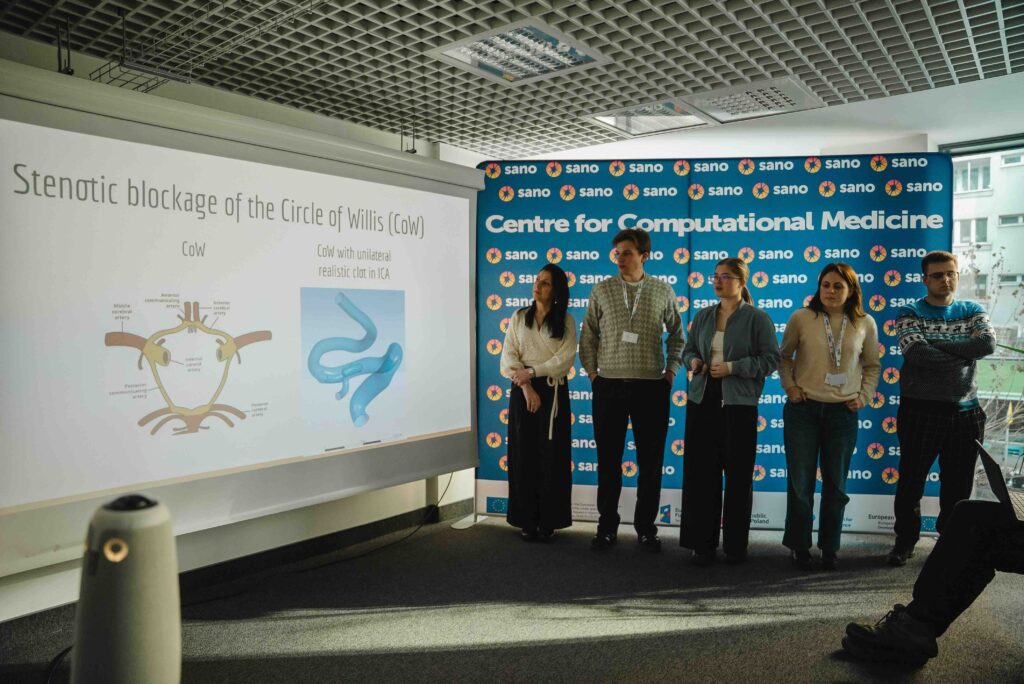
The second day centered on one of the brain’s networks: the Circle of Willis. This ring-shaped system, located at the base of the brain, ensures stable blood circulation even when certain arteries are blocked or narrowed.
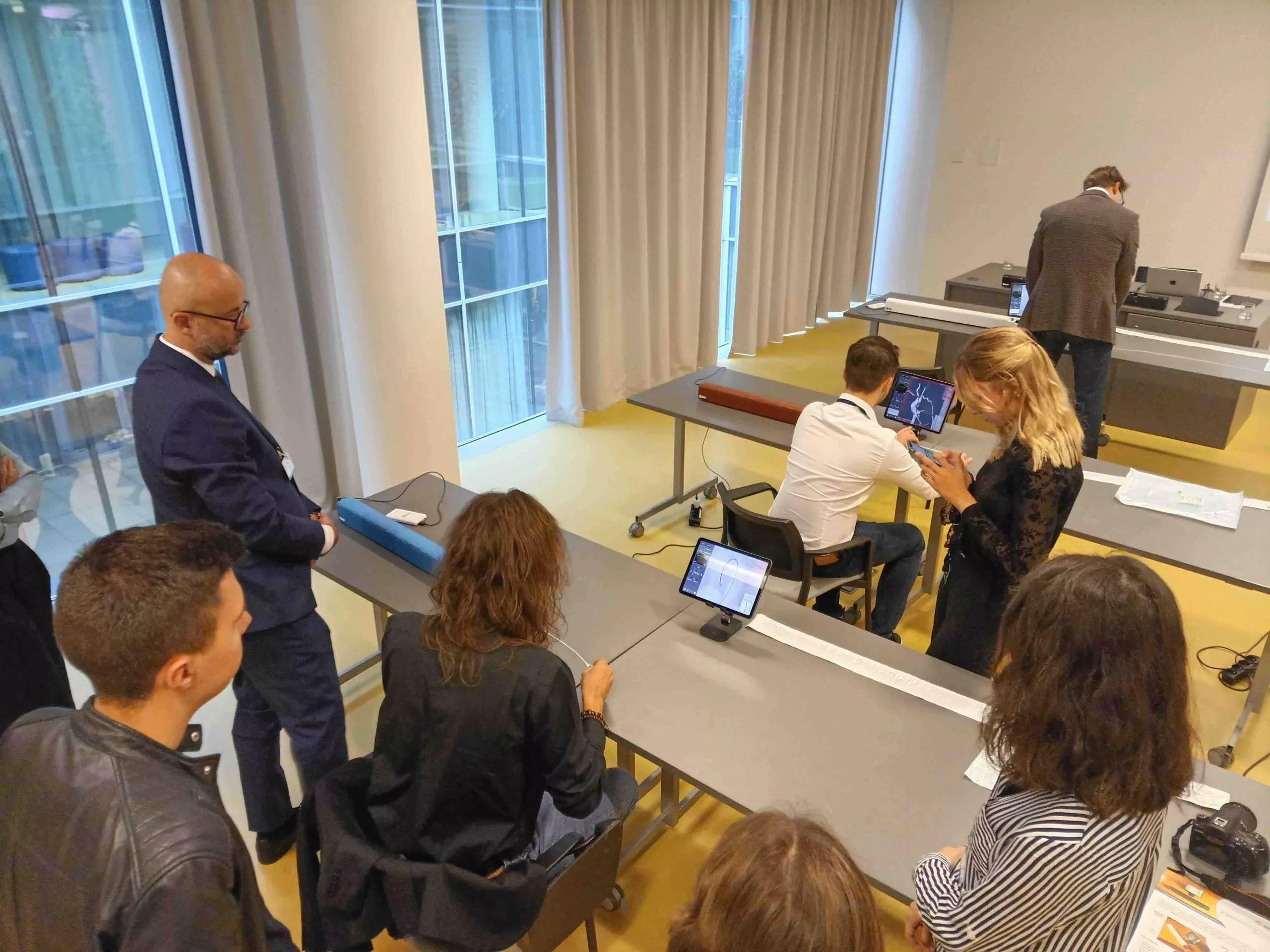
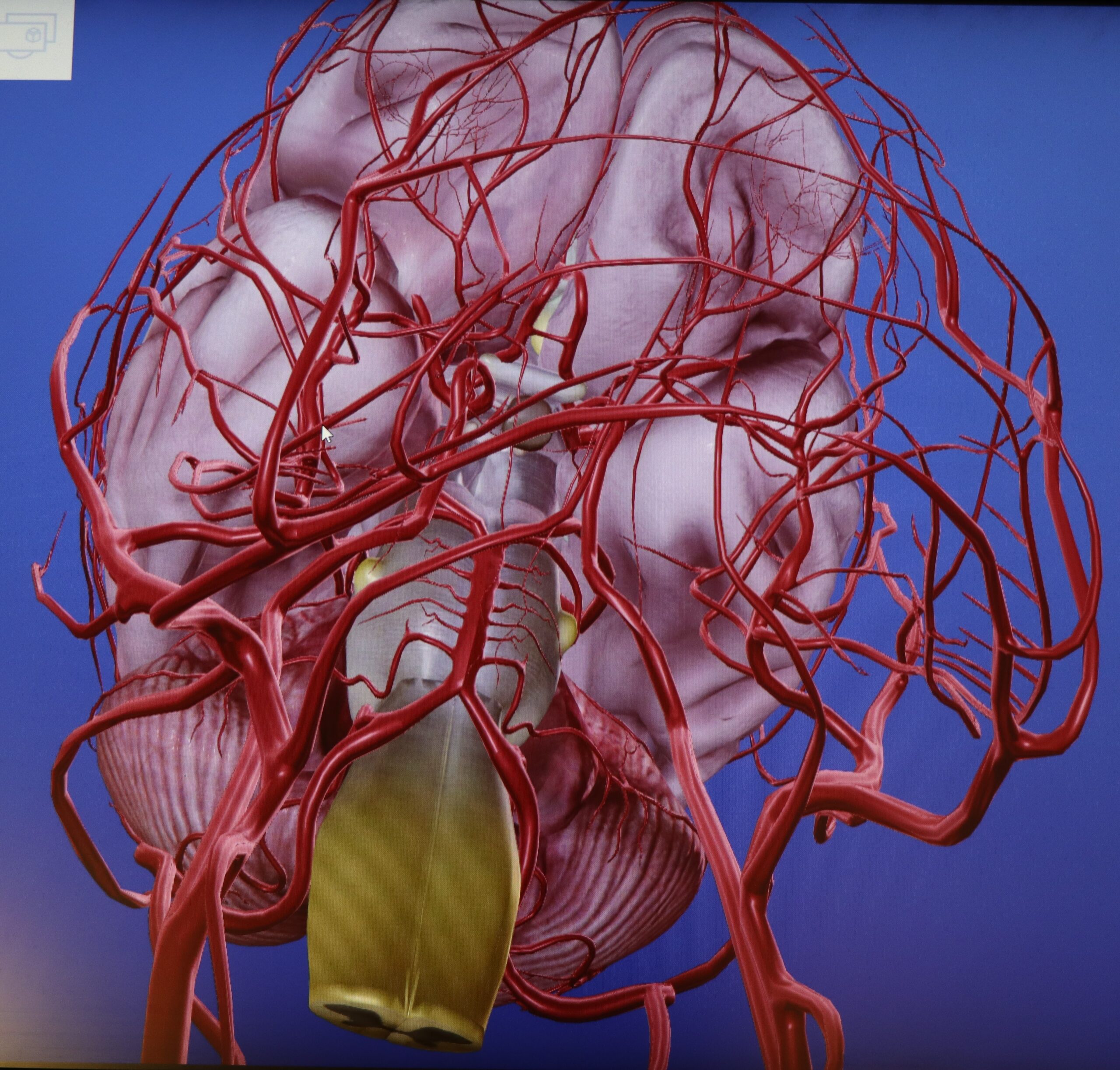
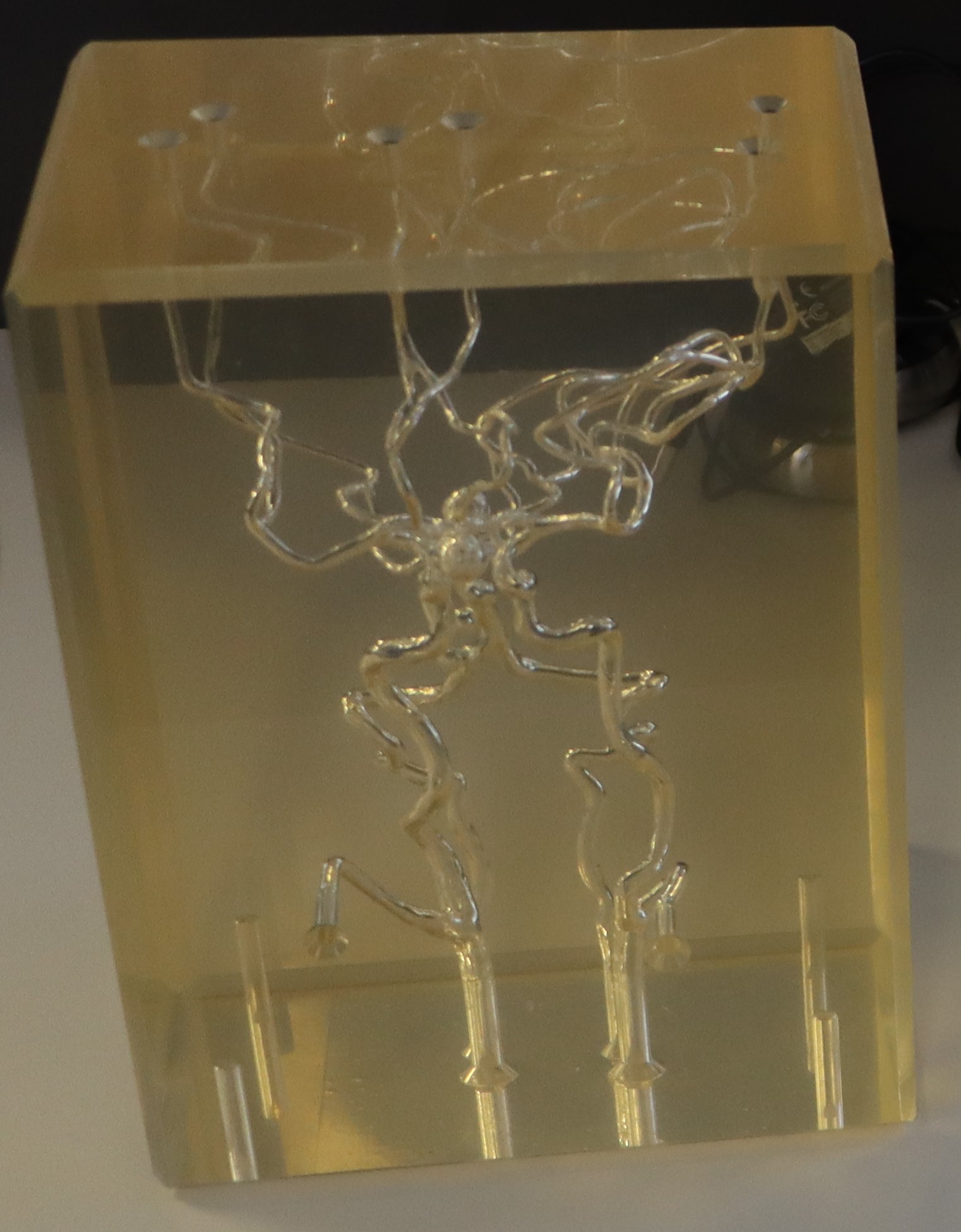
To help participants visualise its complexity, Dr Alberto Marzo introduced both a Virtual Reality tablet and a 3D-printed, patient-specific model of the Circle of Willis — complete with realistic aneurysms. These tools allowed teams to explore the anatomy in three dimensions and directly connect structural details to their modelling strategies.
Immersive sessions continued in both Sheffield and Kraków, supported by Meta Quest VR headsets and guided by Andrew Narracott and Kuba Chrobociński. This combination of digital and tactile learning gave participants a deeper appreciation of how intricate vascular patterns influence brain haemodynamics.
From a technical perspective, teams progressed through the fundamentals of 0D vascular modelling while also undertaking 3D simulations of selected vessels. They carried out sensitivity analyses to examine how changes in one part of the network could alter pressure and flow elsewhere — bridging the gap between theory and real-world physiology.
The day’s activities were enriched by contributions from Stephen Creamer (Auckland Bioengineering Institute), Maciej Ginalski and Julia Zorkina (EDRMedeso), as well as Andrew Narracott (University of Sheffield). Their expert input guided participants through methodological challenges and best practices for simulation-based research.
Day 3 – Integrating Models and Exploring Clinical Scenarios
By Thursday, the teams were ready to merge their models and apply them to clinically meaningful questions. The day’s focus was the integration of 0D and 3D models of the Circle of Willis — an essential step toward understanding how stroke-related blockages affect blood flow dynamics.
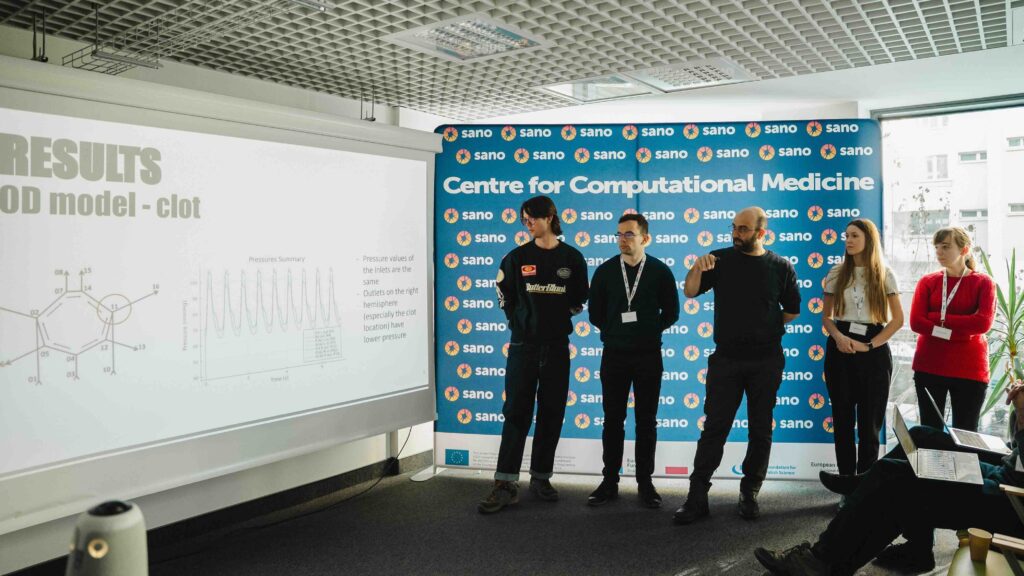
This stage culminated in Challenge #3, where participants introduced an internal carotid artery (ICA) clot into their models. They then simulated different treatment and physiological conditions to observe how these changes altered haemodynamic patterns. Through these experiments, teams explored how computational predictions could inform medical interventions.
As the day progressed, attention shifted from coding and simulation to interpretation and presentation. Teams refined their visualisations, articulated their assumptions, and discussed how their findings might translate into clinical relevance — a key skill in the growing field of computational medicine.
Day 4 – Final Presentations and Outcomes
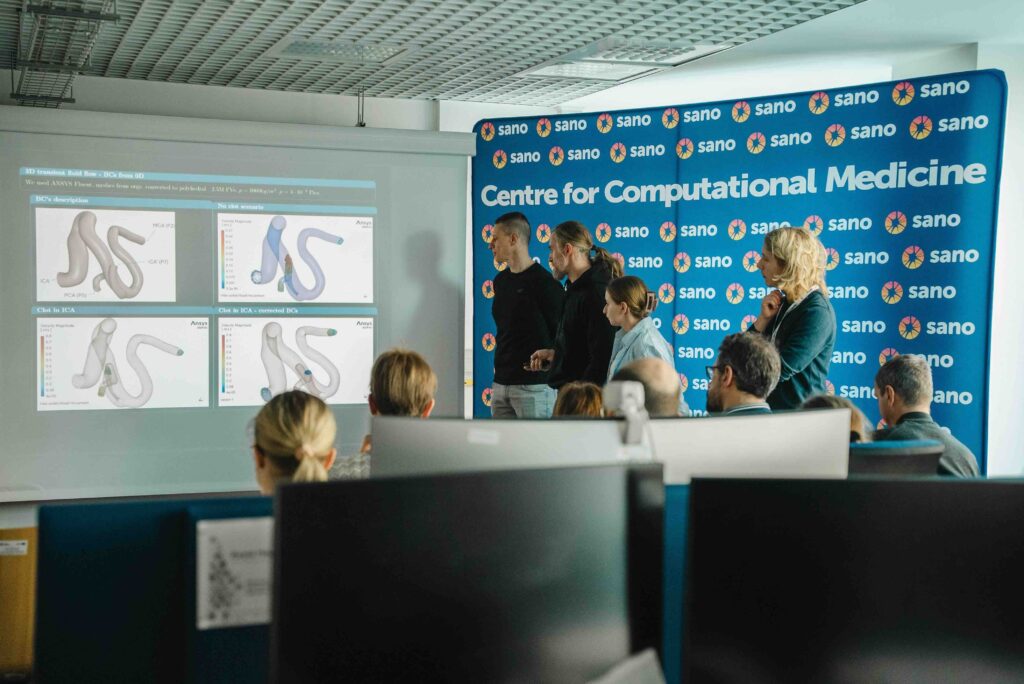
The final day brought a sense of achievement and anticipation. Six interdisciplinary teams presented their completed multiscale models of the cerebral circulation, each showcasing innovative solutions developed over four days of concentrated effort.
Their presentations demonstrated how computational models can integrate different levels of complexity — from 0D system representations to detailed 3D simulations — to explore real clinical phenomena like ischaemic stroke. Judges commended the participants for their high technical competence, teamwork, and creativity. Across all teams, the Modelathon highlighted how hands-on, cross-disciplinary collaboration can turn abstract computational methods into tools with direct clinical potential.
The Insigneo–Sano Modelathon 2026 showcased the power of collaboration between engineers, computer scientists, and clinicians in tackling real-world medical challenges. The organisers thank all participants, mentors, and partners who made this event possible. Together, they demonstrated how in silico approaches — where medicine meets computation — can drive innovation and shape the future of personalised healthcare.