
How to successfully join the international in silico medicine community?
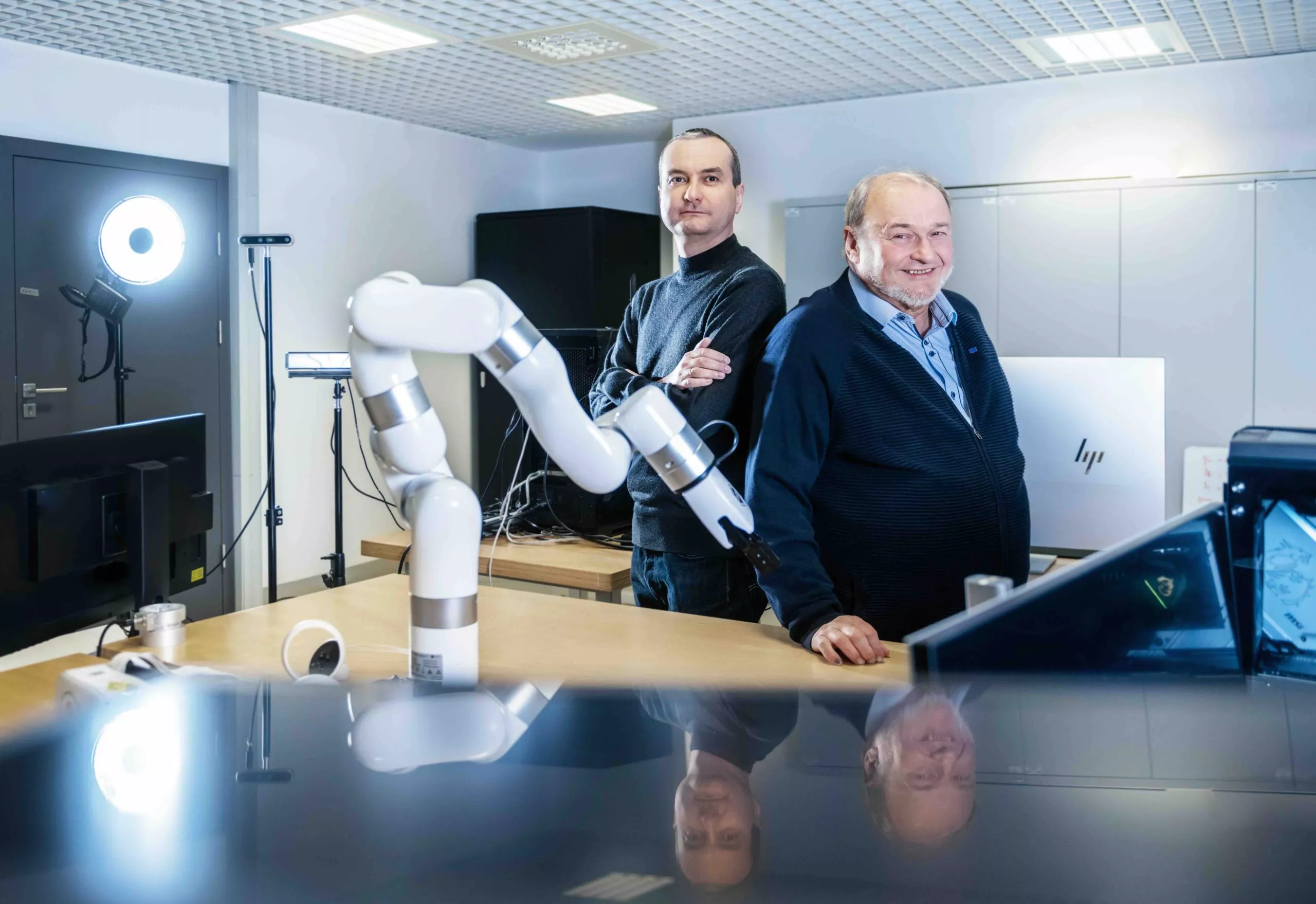
The Perspective of Maciej Malawski and Marian Bubak Presented at “Śniadanie Klastra LifeScience”
During the latest “Śniadanie Klastra LifeScience”, Marian Bubak and Maciej Malawski from Sano shared insights on how to effectively engage with the international ecosystem of computational medicine (in silico medicine). Their discussion focused on two key initiatives: the VPH Society and the VPH Conference 2026. Using these examples, the speakers illustrated how to strategically build a presence within the European landscape of this rapidly evolving field.
The meeting took participants into the world of digital twins – concepts that are increasingly reshaping the way we think about diagnostics, therapy, and healthcare system design. The conversation went beyond theoretical definitions of terms such as Virtual Human Twin and Digital Twin Health Care. Its core question was: how can we actively participate in global initiatives that develop computational models and simulations in medicine?
Europe Builds a Foundation for Digital Twins
In recent years, computational medicine has gained new momentum. In response to global healthcare challenges, the European Union has launched the Virtual Human Twin initiative – an integrated program to develop an ecosystem of human digital twins. Among the partners are Sano and Cyfronet. The project aims to create a comprehensive infrastructure of models, data, and simulation tools enabling the development of personalized digital representations of patients.
The initiative focuses on:
- integrating mathematical and simulation models,
- leveraging artificial intelligence and large datasets,
- validating models with reliable clinical data,
- implementing solutions in clinical practice – from prevention to therapy planning.
This approach distinguishes Europe from other regions, as activities are strategically coordinated at the level of the European Commission, rather than dispersed across individual research projects.
VPH – The Global Community of Computational Medicine
Another discussion point was the growing community of VPH – The Society for In Silico Medicine, which connects scientists, clinicians, industry representatives, and patients around the advancement of in silico medicine. Sano’s membership in the Board of Directors of the Society highlights the rising importance of Poland within this international ecosystem.
The speakers also presented current initiatives of the Society and shared concrete opportunities for involvement – from participation in thematic working groups to contributing to international research projects.
VPH 2026 Conference – A Space for Collaboration
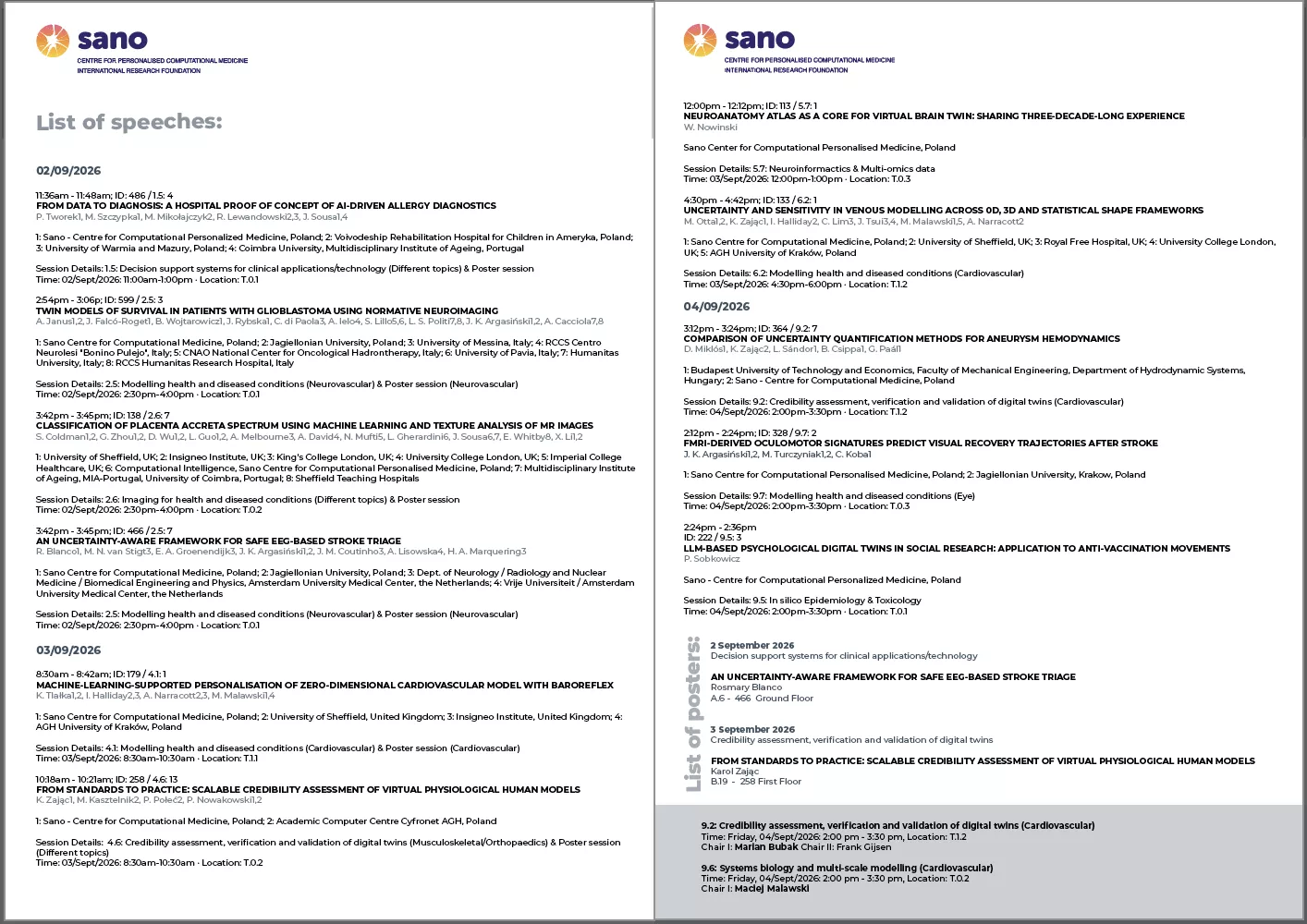
The upcoming VPH 2026 Conference, the ninth edition of this flagship event for the in silico medicine community, received special attention. It is not just a forum for presenting research but also a platform for building international visibility, partnerships, and institutional presence within global consortia.
Drawing on the conference program and their own experience, the speakers explained how to strategically plan conference participation – from preparing an abstract and presentation to making the most of networking opportunities. The event thus served as both an inspiring vision of the future of medicine and a practical roadmap from local research to international collaboration.
From Local Initiatives to European Synergy
The discussion also emphasized that regional projects in Małopolska, including systems based on digital twins, are directly integrated into the European Virtual Human Twin platform. This demonstrates how local efforts can become part of a broader ecosystem built on shared standards for models, data, and computational infrastructure – an environment that may soon be further strengthened through dedicated European initiatives.
From Vision to Co-Creation
The Cluster Breakfast showcased two dimensions of digital medicine development. On one hand, it highlighted software solutions based on computational models that support diagnostics and prevention. On the other, it offered clear pathways for engagement: participation in scientific communities, industry events, and European initiatives.
Today, in silico medicine is no longer a distant vision but a rapidly growing and tangible ecosystem – one that is ready to welcome new contributors.
The Next Step: Joining the International In Silico Medicine Community
Active participation in the global in silico medicine community requires deliberate action.
Key steps include:
- engaging with organizations such as the VPH Society, which bridge science, clinical practice, and industry,
- maintaining a regular presence at professional conferences, including VPH 2026,
- collaborating on EU infrastructure projects like the Virtual Human Twin,
- developing local competencies in multiscale modeling, data integration, high-performance computing, and artificial intelligence – all aligned with the EU’s digital health transformation strategy.
In their conversation, Marian Bubak and Maciej Malawski painted a vivid picture of how science and technology can come together to change the way we understand health. Their vision reaches beyond laboratories and data — it invites us to imagine a future where digital models help doctors personalize treatment, researchers test therapies safely, and patients become active participants in their own care. It’s a reminder that the future of medicine is already unfolding — and that curiosity, cooperation, and creativity remain its true driving forces.