
Testing an Angiography Simulator and Strengthening Scientific Collaboration
Sano Visit to Research Partners in Sheffield and London
From 22 to 27 March, a Sano delegation consisting of Katarzyna Baliga‑Nicholson, Magdalena Otta, Tomasz Gubała, Dominik Stosik and Dominik Czaplicki visited the University of Sheffield (Insigneo Institute) and clinical partners in The Royal Free Hospital in London. The purpose of the visit was to advance joint R&D projects, support technology transfer and strengthen relationships with key academic and medical centres in the United Kingdom.
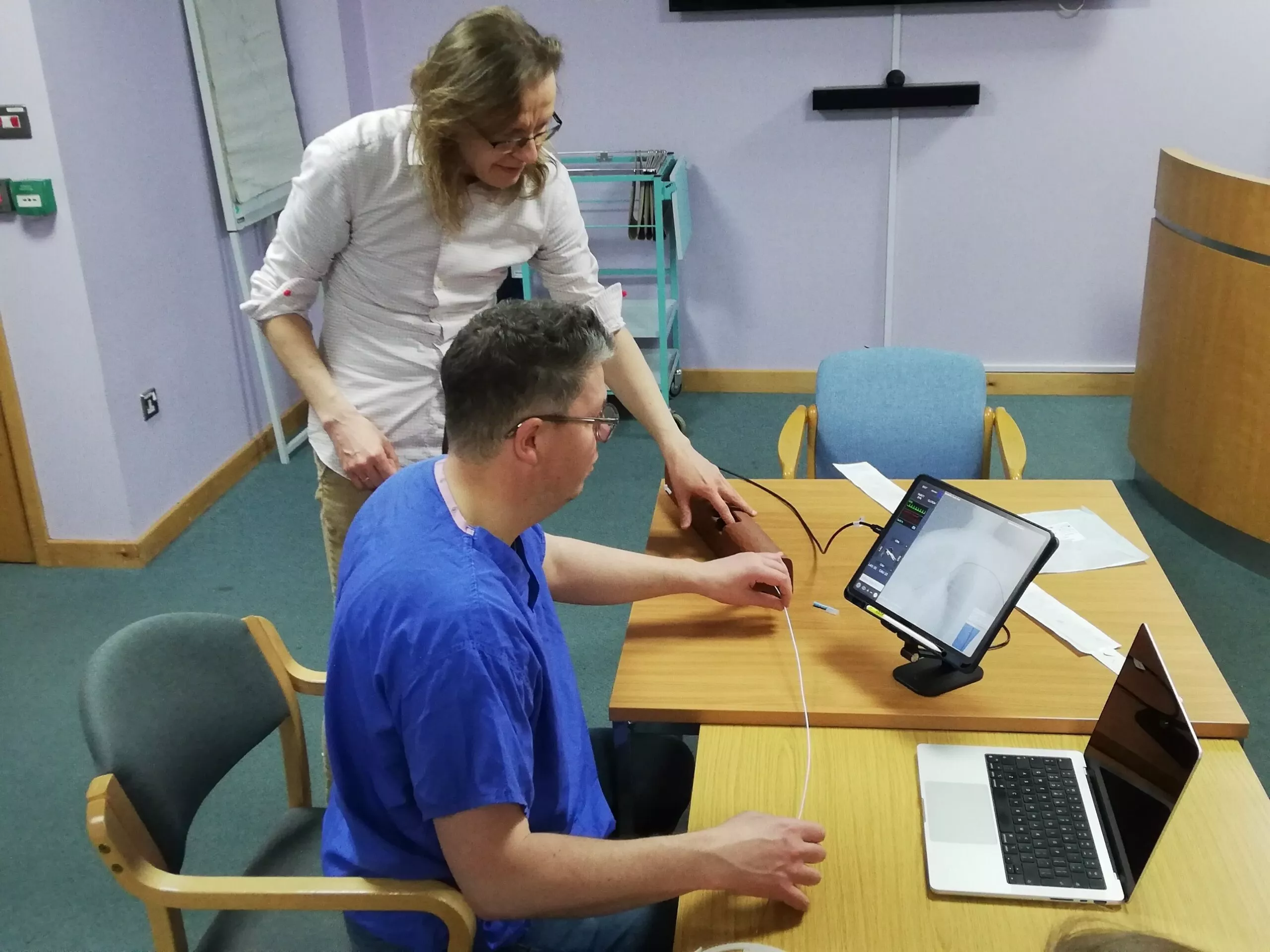
In Sheffield, the team presented a prototype angiography simulator and virtual coronary assessment tools developed at the Sano Centre for Computational Personalised Medicine in Kraków. The simulator makes it possible to reproduce cardiology procedures in safe, controlled conditions, which is particularly important for training early‑career physicians. Paul Morris provided feedback on the hardware, haptic realism and visualisation aspects, emphasising the strong potential of Sano’s solution and its possible advantages over existing commercial systems – especially in the field of medical education.
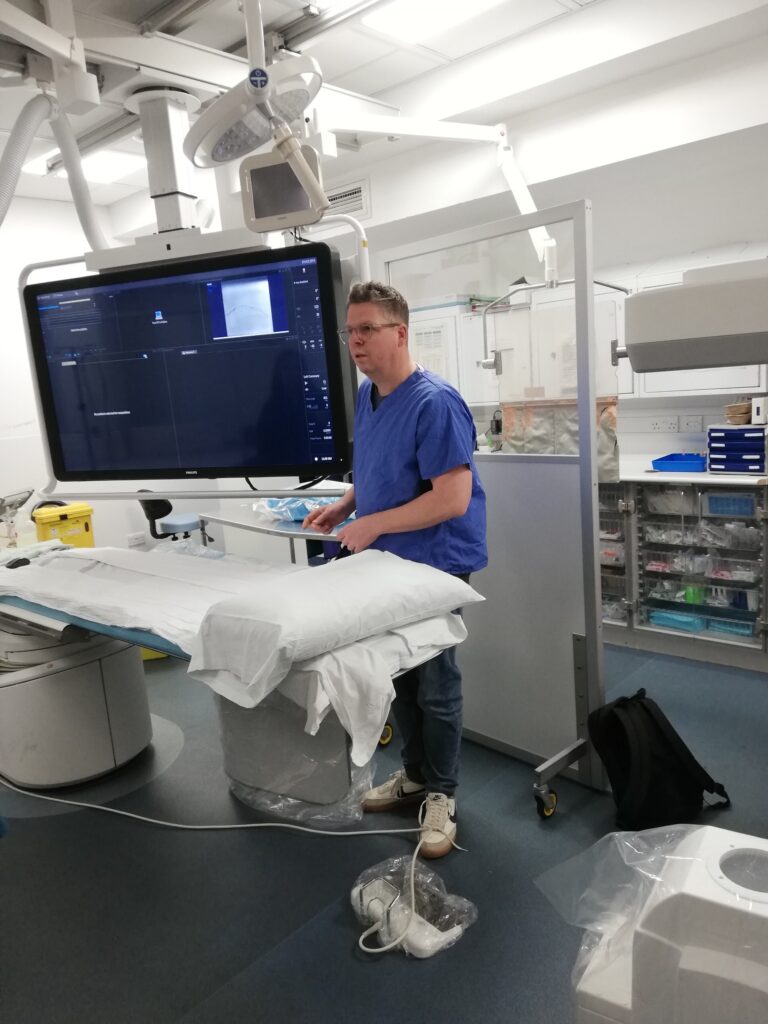
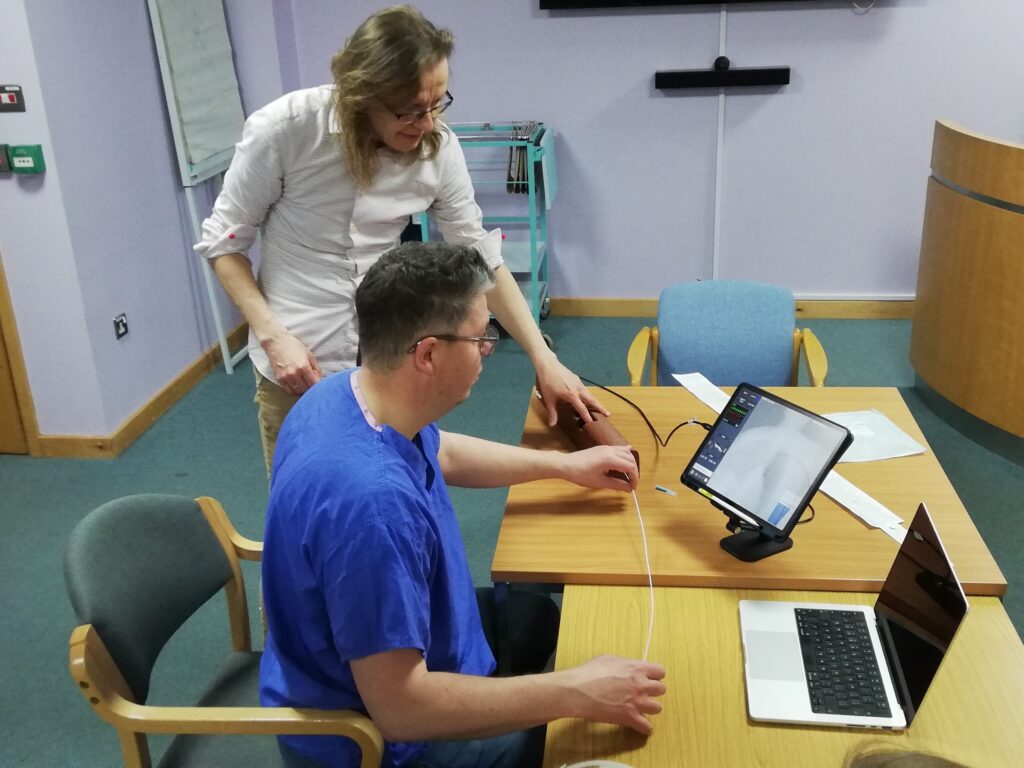
Paul Morris at Sheffield Teaching Hospitals
During meetings at the Insigneo Institute, the delegation also discussed further collaboration with Dr Andrew Narracott and Dr Ning Ma in the areas of medical applications of artificial intelligence, patient‑specific digital twins and access to health data (the Data Connect initiative). The discussions focused on joint activities between Sano and the Insigneo Healthcare Data/AI team, as well as ongoing efforts to build an AI community in Sheffield. The Sano delegation also took part in a meeting of the Digital Twin in Healthcare Technology (DT4HT) network, where current research was presented and challenges related to the use of virtual patient models in diagnosis and treatment planning were discussed.
In conversations with Alex Wilkinson and Jonathan Taylor, the focus was on pathways for translating and implementing Sano solutions within Sheffield Teaching Hospital(STH) and the Sheffield 3D Lab environment. The discussions covered, among othe topics, how computational medicine tools can be integrated into everyday clinical workflows – from pilot projects through to full‑scale deployment.
The team also met with Chung Sim Lim, a consultant vascular surgeon and honorary clinical lecturer at the Royal Free London and an honorary consultant at the Great Ormond Street Hospital for Children. The discussions addressed clinical needs related to deep vein thrombosis and complex vascular malformations. In this context, Magdalena Otta presented a Sano project on venous haemodynamics modelling and the creation of digital twins to assess thrombosis risk. The project includes modelling venous blood flow based on individual patient vessel geometry, the use of 0D and 3D models, simulation of thrombotic risk before and after interventions, and visualisation of results using colour wall shear stress (WSS) maps, which help clinicians intuitively assess areas particularly prone to thrombosis. The London partners highlighted the high potential clinical utility of this approach and expressed interest in further collaboration.