
Scary Science 2025: Science, Art, and Microscopic Witnesses
A Halloween Fusion of Disciplines
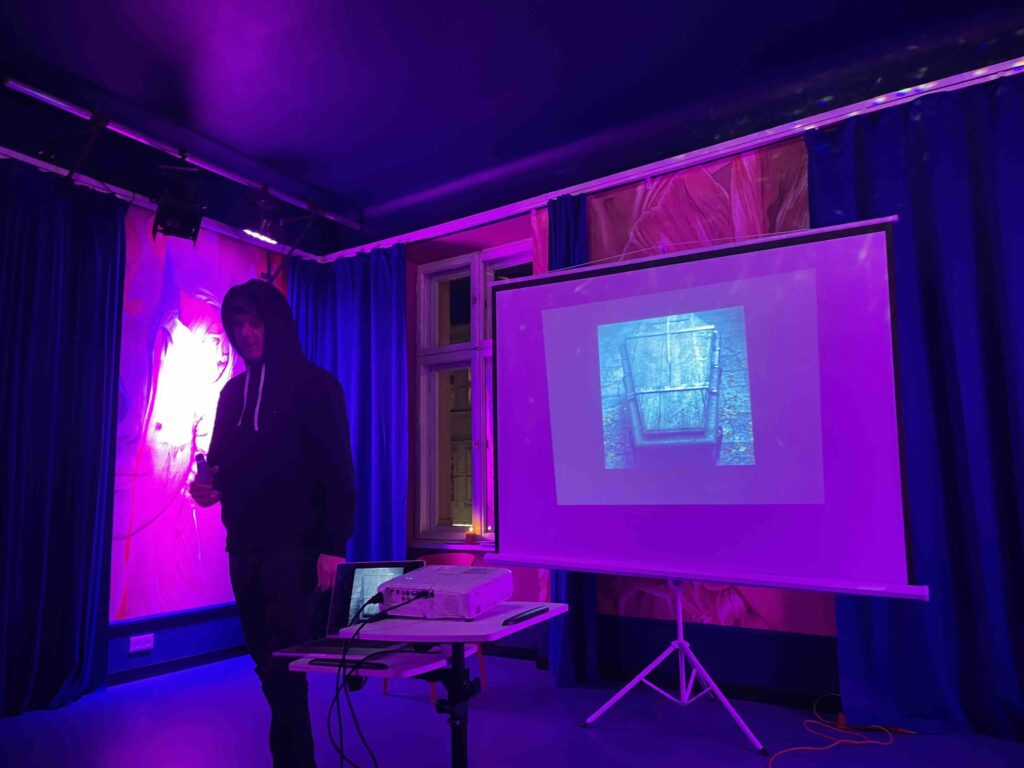
On a Halloween evening, the Palace of Immortality in Krakow hosted an extraordinary night at the intersection of science, art, and experimentation—Scary Science 2025, organized by the Sano Centre for Computational Medicine. This event balanced science popularization with artistic performance, filling the palace halls with tales of microbes, parasitic fungi, and the intricate links between pain and creativity.
Microbes as Invisible Detectives
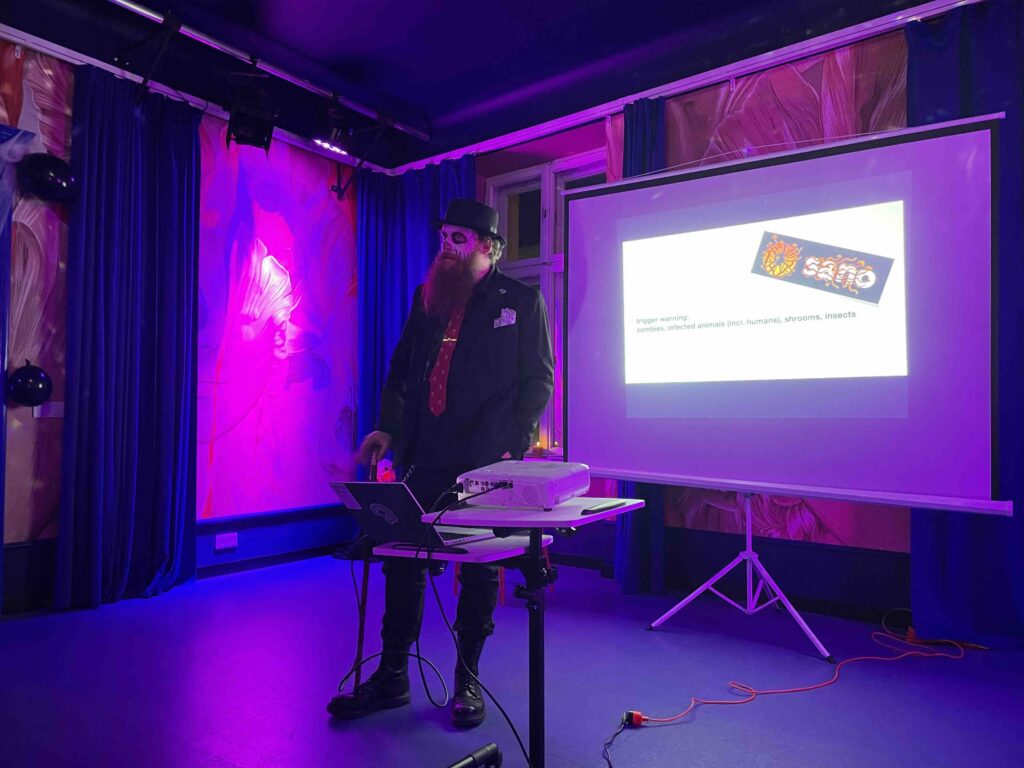
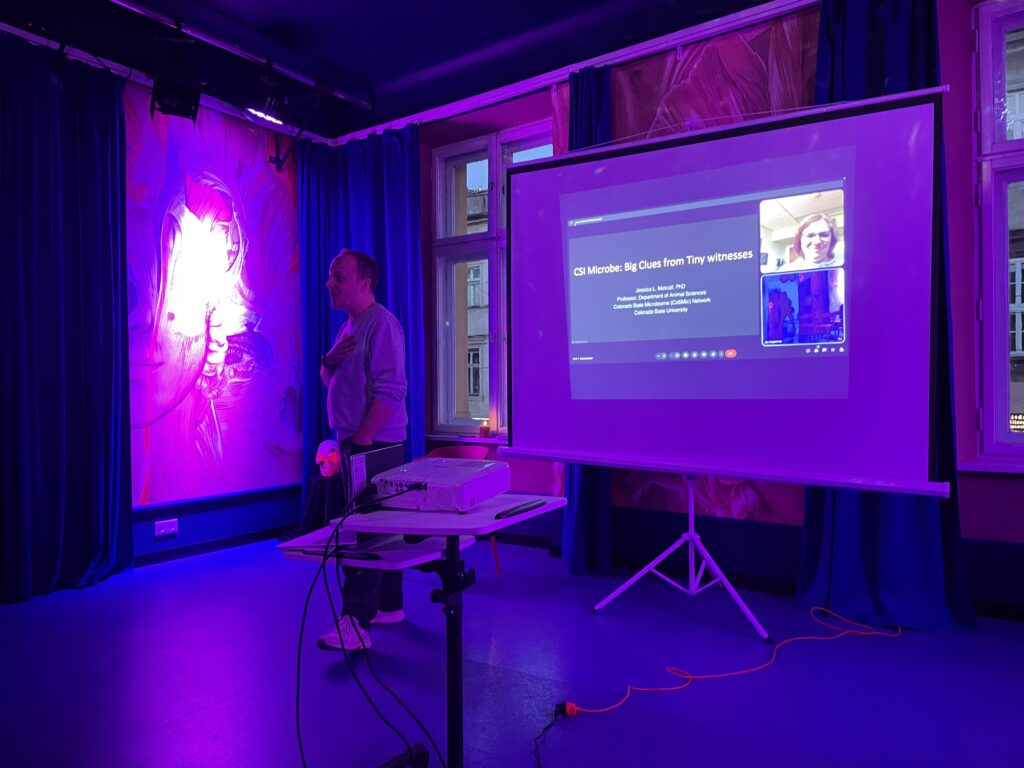
The evening’s special keynote speaker was Prof. Jessica Metcalf from Colorado State University, who delivered the lecture “CSI Microbe: Big Clues from Tiny Witnesses”. She revealed how microbial communities act as invisible witnesses, providing crucial insights into criminal and environmental investigations. Her presentation highlighted the power of science to decode microbiological traces in the quest for truths about life and death.
Fungi That Hijack Minds
Jan K. Argasiński took participants into the realms of neuroethology and evolutionary biology, focusing on Cordyceps fungi. These parasites’ remarkable ability to seize control of insects’ nervous systems sparked reflections on how parasitism inspires behavioral modeling and artificial intelligence research.
Pain as a Bridge to Art
Meanwhile, Katarzyna Baliga and Kamil Pilch presented an essay on pain, blending film, artistic analysis, and documentation of creative process. In their view, suffering became not just a theme but a tool for understanding, demonstrating how emotions and science can engage in meaningful dialogue.
A Reflective Cinematic Close
The night concluded with Dominik Stosik’s auteur projection, which wrapped up the evening in a lighter yet thoughtful tone. It wove a cohesive, interdisciplinary narrative about the interplay of science and contemporary culture.
Scary Science created a space for exchanging ideas beyond everyday research interests, bringing together microbiologists, neurobiologists, artists, and a curious public. True to Sano’s mission, the event showed how complex biological phenomena can be presented in engaging, accessible, and inspiring ways, bridging laboratories with art, empiricism with imagination.