
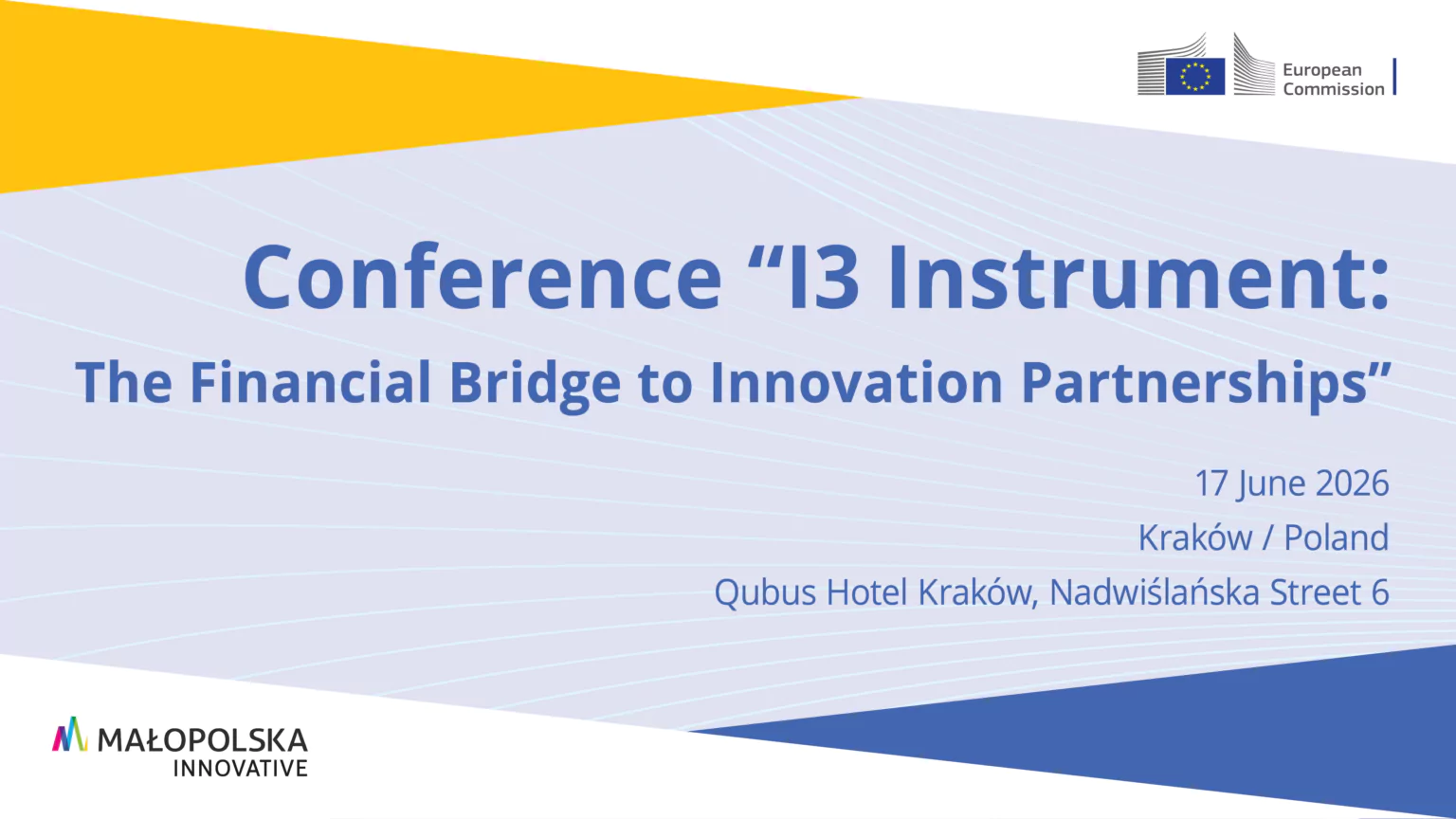
Sano at “I3 Instrument: The Financial Bridge to Innovation Partnerships”
Exploring new EU funding opportunities for interregional innovation in Krakow
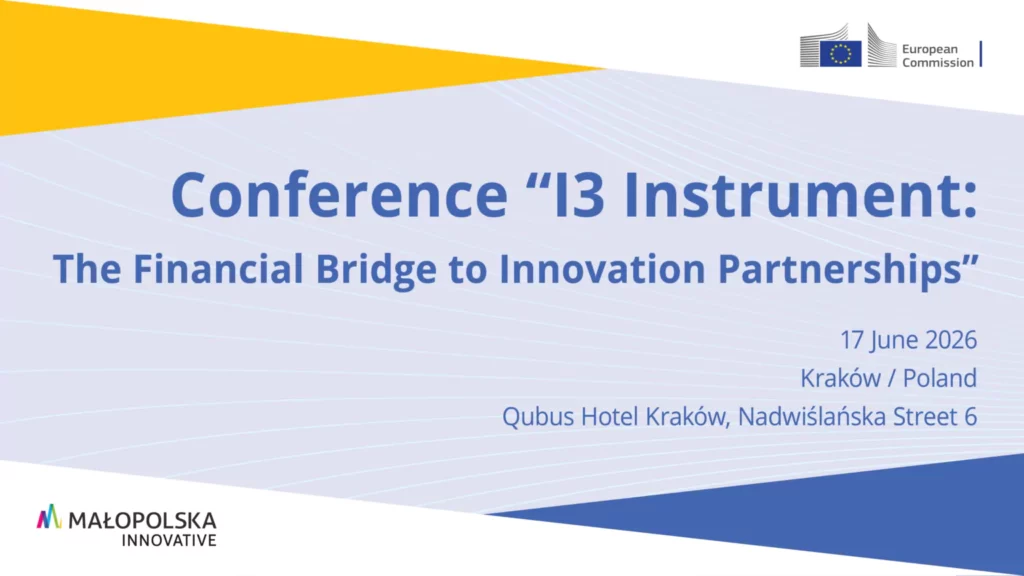
On 17 June, the international conference “I3 Instrument: The Financial Bridge to Innovation Partnerships” took place in Krakow, bringing together representatives of the European Commission, European regions, local authorities, cooperation networks and I3 project participants. Sano was represented by Katarzyna Jarecka, who joined the discussions on how the Interregional Innovation Investments (I3) Instrument can help turn mature innovation concepts into investment‑ready projects with strong market potential.
The event was officially opened by Witold Kozłowski, Deputy Marshal of the Małopolska Region, and Wolfgang Münch from the Directorate‑General for Regional and Urban Policy at the European Commission, underlining the strategic importance of the I3 Instrument for regional innovation ecosystems. Organising the conference in Krakow directly responds to the European Commission’s call to better inform Central and Eastern European regions about the opportunities and benefits linked to participation in I3 projects, where awareness and uptake are still lower than in many other parts of the EU.
The Interregional Innovation Investments (I3) Instrument is a funding tool under the European Regional Development Fund that supports interregional innovation partnerships and projects with high market potential, especially in areas such as green transition, digital transformation and smart manufacturing. The European Commission has adopted a new work programme for 2025–2027, with a budget of around €176 million for upcoming calls, offering substantial opportunities for actors ready to scale up innovation across regional borders.
The Krakow conference programme included presentations on Małopolska’s innovation potential, the support available through the Enterprise Europe Network and the detailed rules of the I3 Instrument. Two panel discussions focused on building effective international consortia and on the role of clusters and business environment institutions in developing regional innovation ecosystems, followed by a practical session on preparing competitive project proposals for I3 calls, with participants able to ask questions directly to European Commission experts.
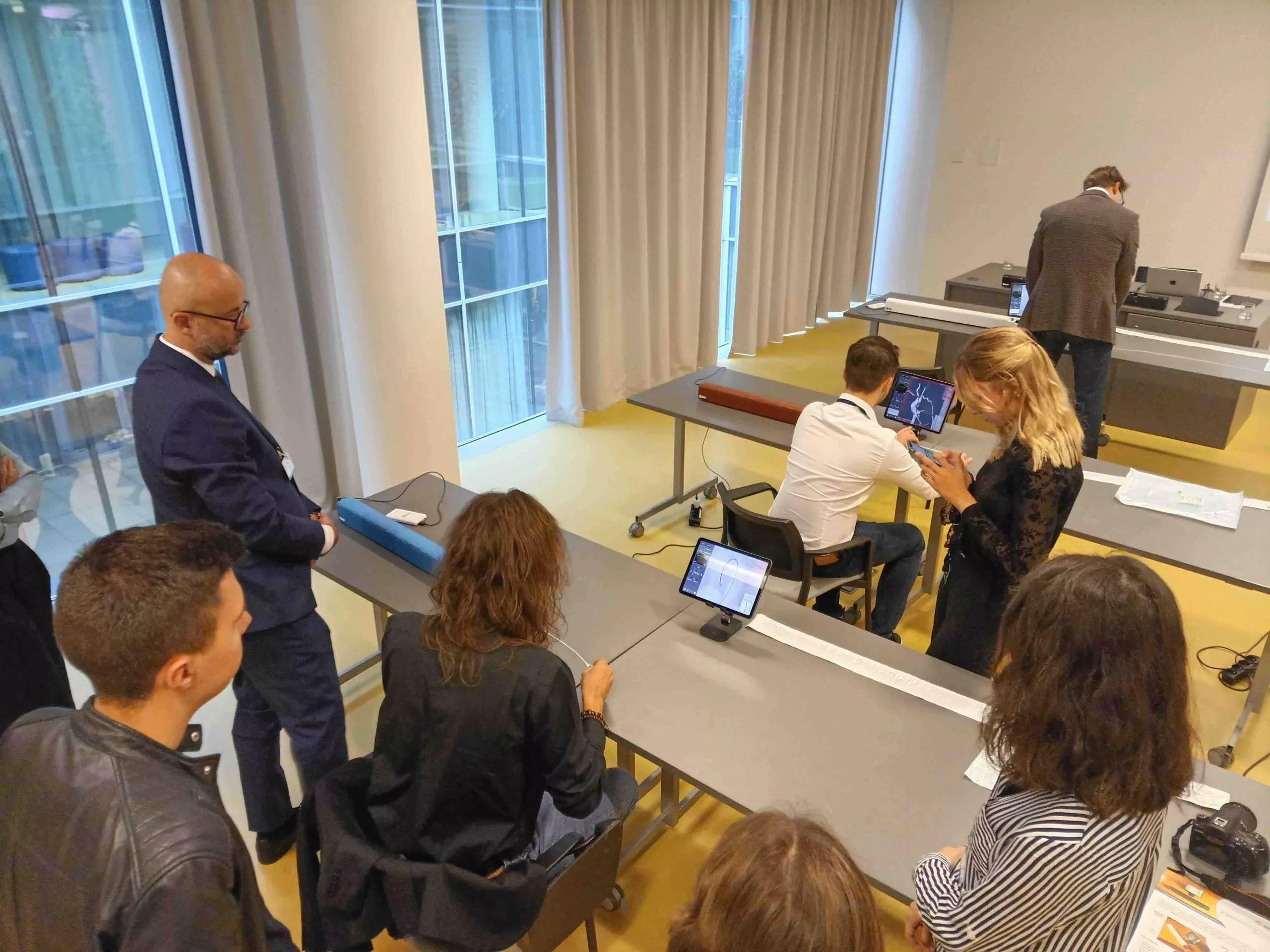
The event concluded with a networking and consultation session featuring Małopolska projects already implemented under the I3 Instrument, where participants could discuss their own project ideas with Commission experts and explore cooperation opportunities in three key areas: green transition, digital transformation and smart manufacturing. For Sano, taking part in this conference was an opportunity to stay close to the evolving EU funding landscape and to identify potential partners and instruments that could support future projects in computational medicine and related innovation fields.