
Sano at BIT26: Tracking the Sinus Microbiome
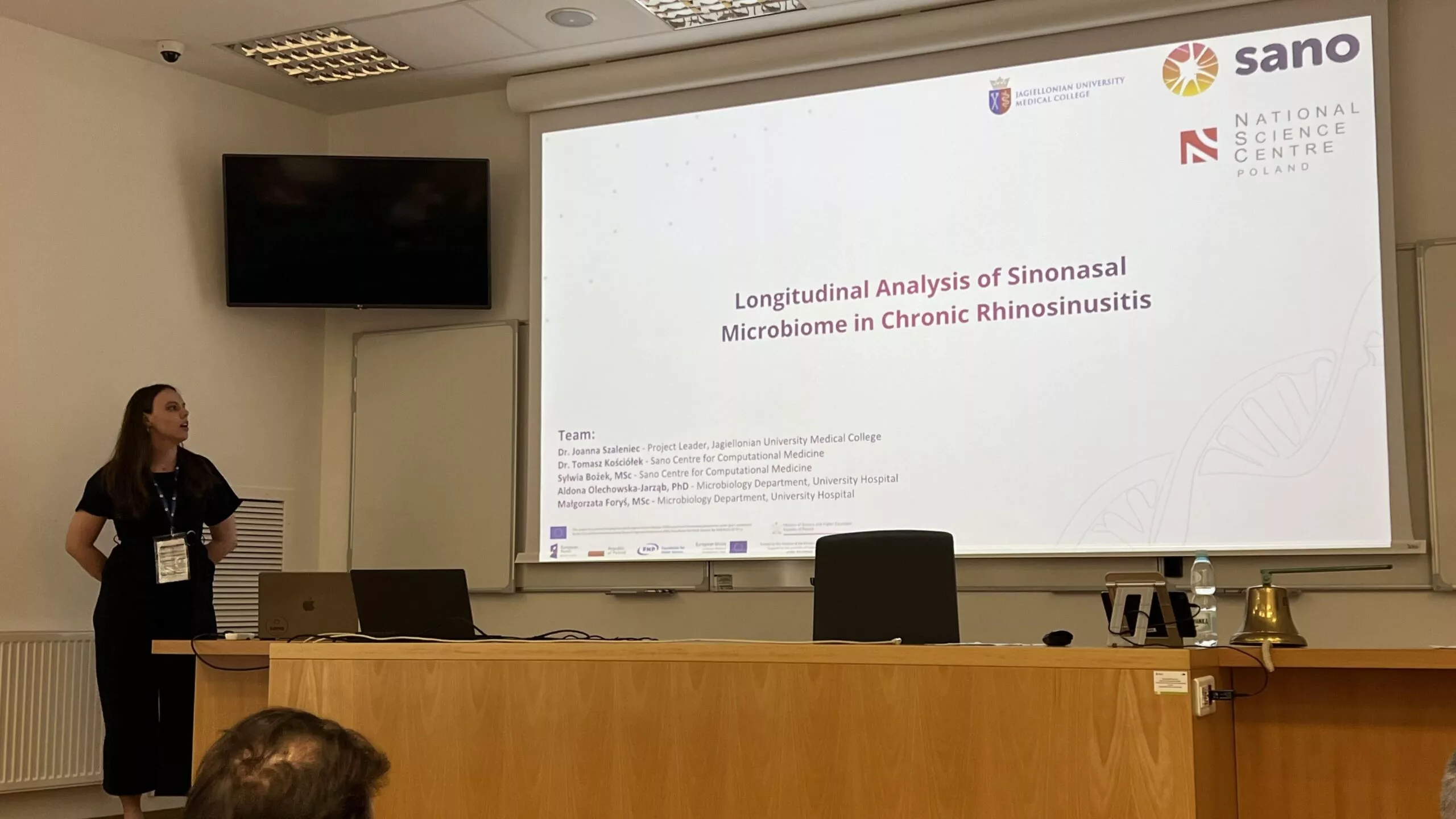
At the 26th Bioinformatics in Toruń conference, Sano's Sylwia Bożek presented work on how the sinonasal microbiome changes over time in chronic rhinosinusitis.
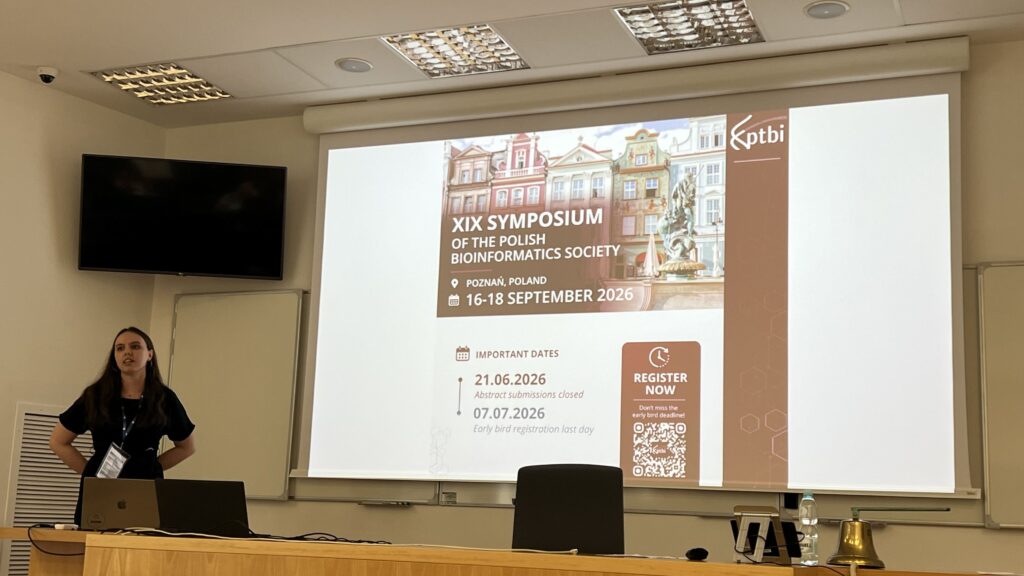
From 18 to 20 June 2026, the 26th Bioinformatics in Toruń (BIT26) Conference was organized by the Polish Bioinformatics Society and the Faculty of Physics, Astronomy and Informatics at Nicolaus Copernicus University in Toruń. This year’s programme, themed “Computer modelling in Bio and Med worlds. ML, AI, MD, and other approaches”.
Among the presenters was Sylwia Bożek, Junior Research Specialist in the Structural and Functional Genomics Group at Sano – Centre for Computational Personalized Medicine. She presented recent findings from the project “Longitudinal Analysis of the Sinonasal Microbiome in Chronic Rhinosinusitis“, led by Dr Joanna Szaleniec from the University Hospital in Kraków and Dr Tomasz Kościółek from Sano. Chronic rhinosinusitis is a common, persistent inflammatory condition, and understanding how the community of microorganisms living in the sinonasal cavity changes over time may help better understand the disease and could lead to more precise diagnostics.
Several talks highlighted how computational tools are increasingly being applied in biomedical research. Dr Aleksandra Świercz (Poznań University of Technology) presented Genomics for Poland (G4PL) initiative, discussing its role in advancing genomic research and supporting the development of precision medicine. Prof. Włodzisław Duch (Nicolaus Copernicus University) shared his perspective on current developments and future challenges in artificial intelligence.
For Sano, BIT26 was an opportunity to share its interdisciplinary approach, bringing together genomics, data science, and clinical collaboration, and to connect with researchers working in bioinformatics across Poland.
- Microbiome — the whole community of microorganisms living in a particular part of the body, here sinonasal cavity.
- Sinonasal — relating to the nasal cavity and the paranasal sinuses
- Chronic rhinosinusitis (CRS) — long-lasting inflammation of the nose and sinuses (typically 12 weeks or more), with symptoms such as blockage, discharge and reduced sense of smell.
- Longitudinal analysis — a study that follows the same subjects and takes repeated measurements over time, rather than a single snapshot.
- Precision medicine — tailoring prevention and treatment to the individual patient, using data such as their genes, biology and environment.
- Genomic infrastructure — the labs, sequencing capacity, data tools and repositories that enable large-scale study and use of genetic data.