
Sano participates in Open-H-Embodiment
— a global initiative opening a new chapter in medical robotics and Physical AI
The launch of Open-H-Embodiment was announced during NVIDIA’s GTC conference as the first large-scale open data initiative for healthcare robotics. The project aims to establish shared foundations for developing artificial intelligence systems capable of operating in the physical world, particularly in surgical and medical imaging contexts.
Sano Centre for Computational Personalised Medicine is an active participant in this initiative, with its team contributing high-fidelity simulated datasets to the development of this global data resource.
What is Open-H-Embodiment?
Open-H-Embodiment is a community-driven initiative focused on building a shared, open dataset for training and evaluating AI models in medical robotics. The project centers on so-called Physical AI—intelligent systems that can act in real-world environments, for example by supporting surgical robots or ultrasound systems.
The initiative was launched through collaboration between leading experts: Prof. Axel Krieger (Johns Hopkins University), Prof. Nassir Navab (Technical University of Munich), and Dr. Mahdi Azizian (NVIDIA). It has since expanded to include 35 international organizations spanning academia, industry, and healthcare.
Participating institutions include Balgrist, CMR Surgical, The Chinese University of Hong Kong, Great Bay University, Hong Kong Baptist University, Hamlyn, ImFusion, Johns Hopkins University, University of Leeds, Mohamed bin Zayed University of Artificial Intelligence, Moon Surgical, NVIDIA, Northwell Health, Óbuda University, The Hong Kong Polytechnic University, Qilu Hospital of Shandong University, Rob Surgical, Sano – Centre for Computational Personalised Medicine International Research Foundation, Surgical Data Science Collective, Semaphor Surgical, Stanford University, TU Dresden, Technical University of Munich, Tuodao, University of Turin, University of British Columbia, UC Berkeley, UC San Diego, University of Illinois Chicago, University of Tennessee, University of Texas, Vanderbilt University, and Virtual Incision.
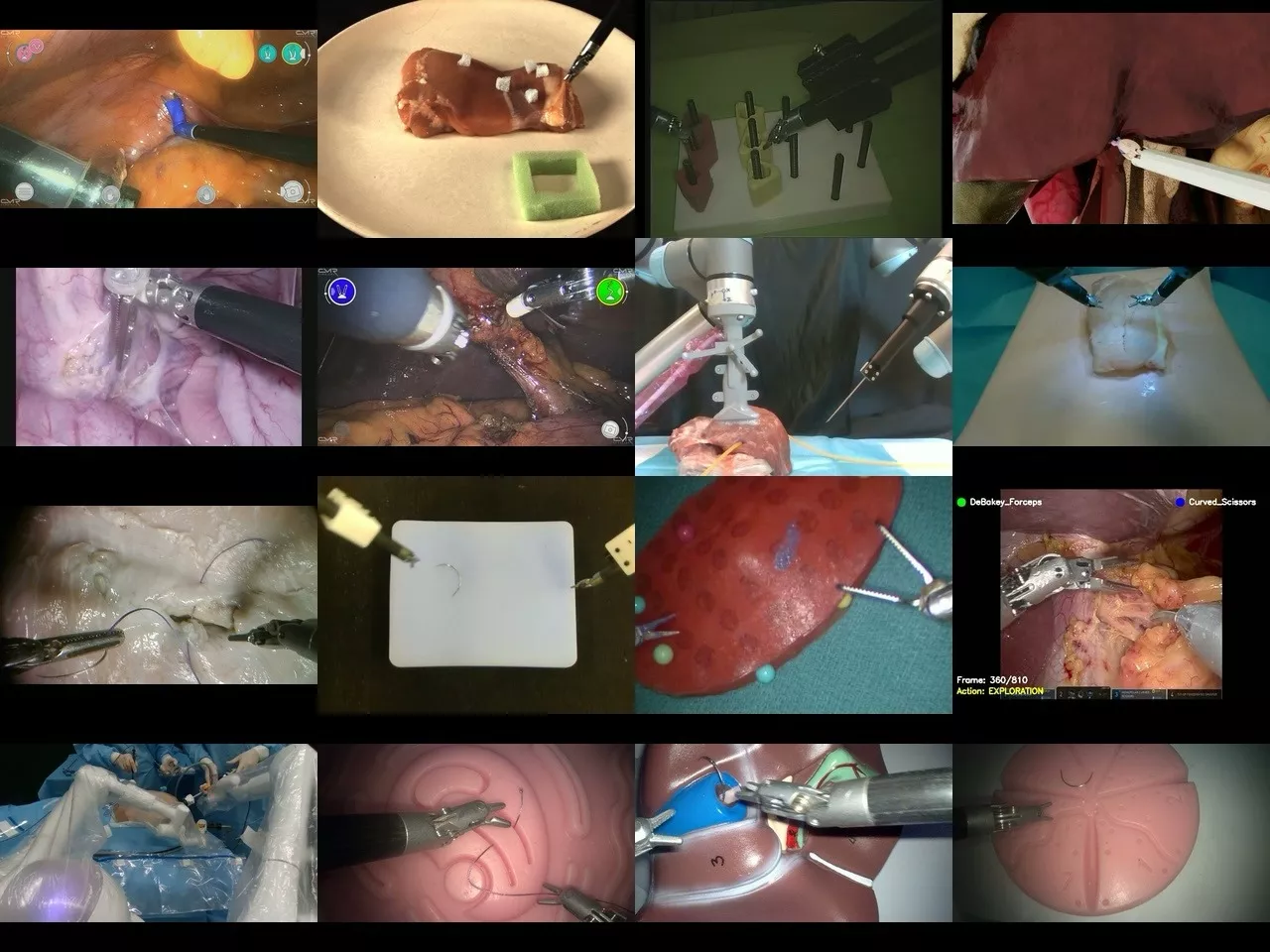
Together, the consortium has compiled over 770 hours of CC-BY-4.0 healthcare robotics training data—primarily from surgical robotics, but also including ultrasound and colonoscopy autonomy—making it one of the largest datasets of its kind worldwide.
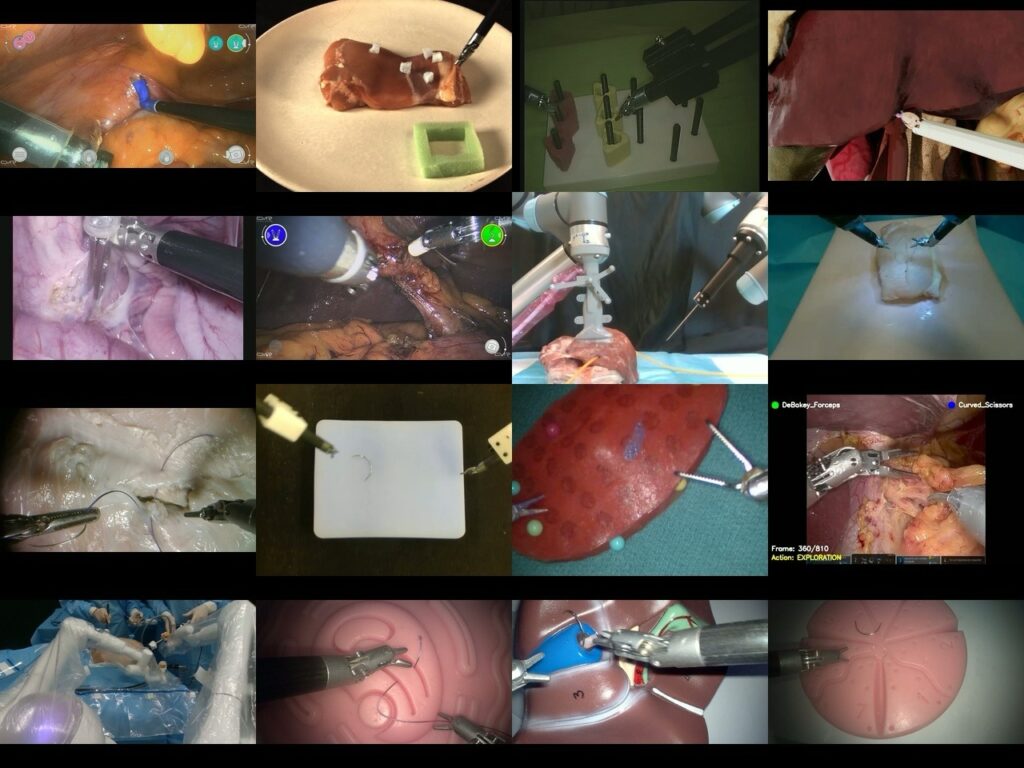
Source: NVIDIA via Hugging Face, “Physical AI for healthcare robotics”, huggingface.co/blog/nvidia/physical-ai-for-healthcare-robotics
From Data to AI Models
The collected data enabled the development of two breakthrough AI models:
- GR00T-H — the first pretrained Vision-Language-Action (VLA) model for surgical robotics, integrating visual perception, language understanding, and action.
- Cosmos-H-Surgical-Simulator — a kinematics-based simulation model that enables AI training across diverse robotic configurations.
This marks an important step toward building foundation models for medical robotics—general-purpose AI systems that can be adapted to a wide range of clinical applications.
Sano’s Role in Building Open-H-Embodiment
On Sano’s side, the project involved Sabina Martyniak, Mateusz Wójcikowski, and Michał Naskręt from the Medical Imaging and Robotics team led by Dr. Przemysław Korzeniowski.
Their main responsibility was to prepare and standardize data generated with a simulator developed at Sano. The dataset includes recordings of both expert and non-expert users performing robotic cholecystectomy in a VR-simulated environment. It captures not only successful procedures but also errors and recovery attempts, and is enriched with multiple camera perspectives, variable lighting conditions, different levels of anatomical realism, and additional modalities such as depth maps, segmentation masks, approximate surface normals, and optical flow for each view. The data were generated in collaboration with Filippo Filicori, Aditya Amit Godbole, and their team at Northwell Health, as well as Dr Maria Clara Morais, and were subsequently processed for compatibility with the Open-H-Embodiment framework, making them part of the global dataset used to train AI models.
Why does it matter?
Sano’s participation in Open-H-Embodiment highlights the active role of Polish research teams in shaping international initiatives that define the future of medicine.
This project is particularly important because it:
- accelerates the development of medical robotics through open access to high-quality data,
- enables the creation of more advanced and generalizable AI models,
- fosters collaboration between academia, industry, and healthcare systems.
It also demonstrates how research efforts translate into tangible, global resources that support innovation in next-generation medicine.
Learn more: