
Brainhack Warsaw 2026:
How Fast Can the Brain Learn?
Three Days at the Intersection of Science and Technology
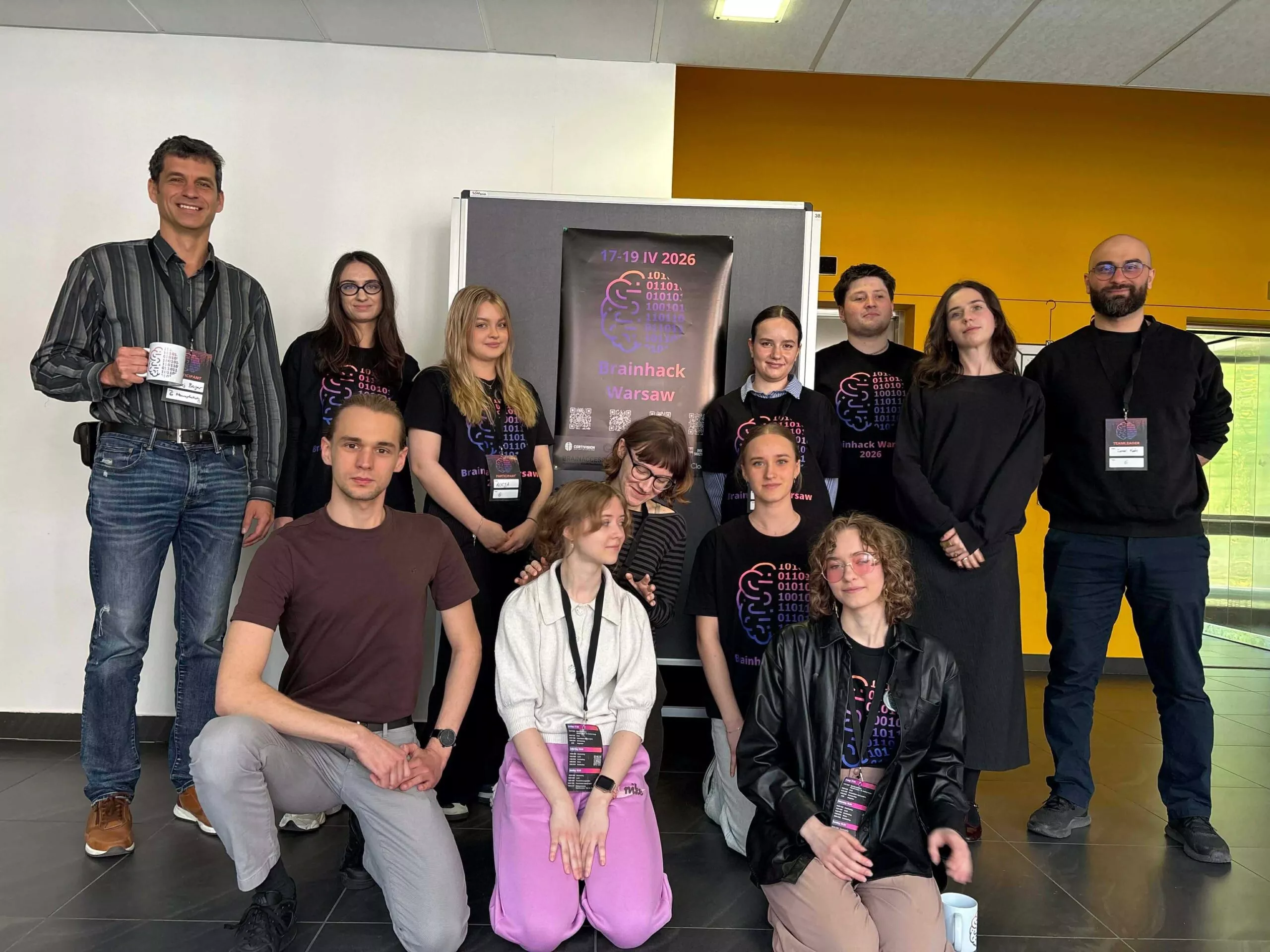
In mid-April, Warsaw once again became a hub for enthusiasts of neuroscience, technology, and artificial intelligence. The 8th edition of Brainhack Warsaw, organized by the Neuroinformatics Student Association at the Faculty of Physics, University of Warsaw, brought together students, PhD candidates, and early-career researchers from diverse fields. Over three days, participants collaborated, exchanged ideas, and built innovative solutions at the crossroads of science and technology.
The event focused not only on developing new ideas but also on fostering a community grounded in collaboration, open science, and knowledge sharing.
Sano Team Returns
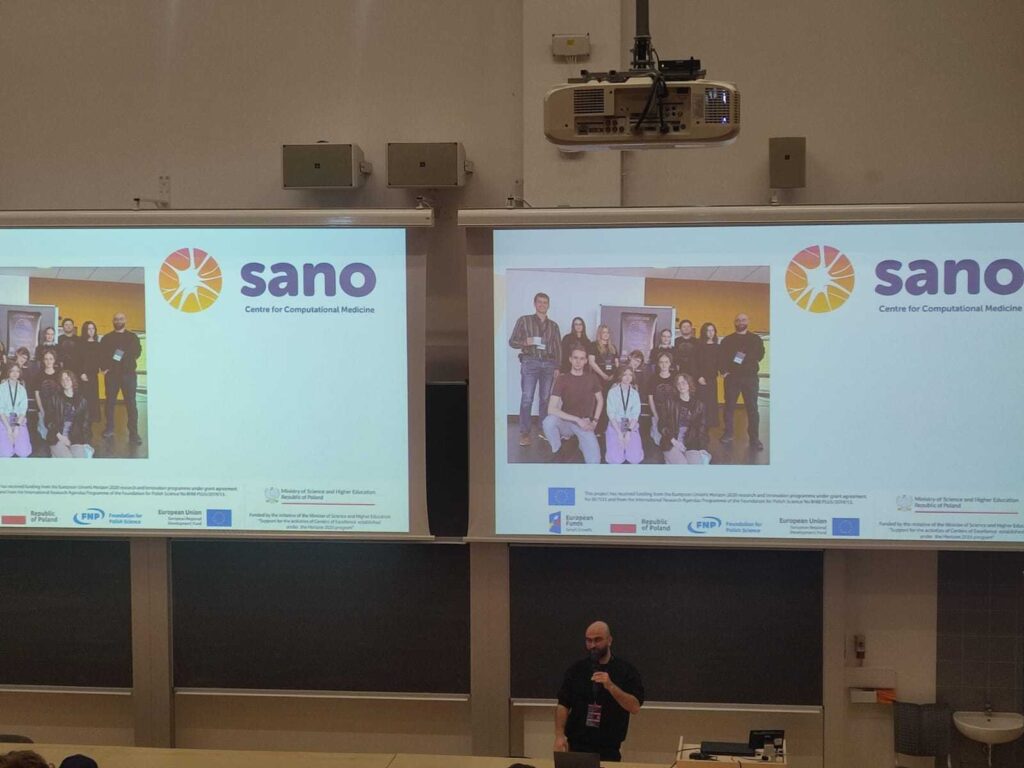
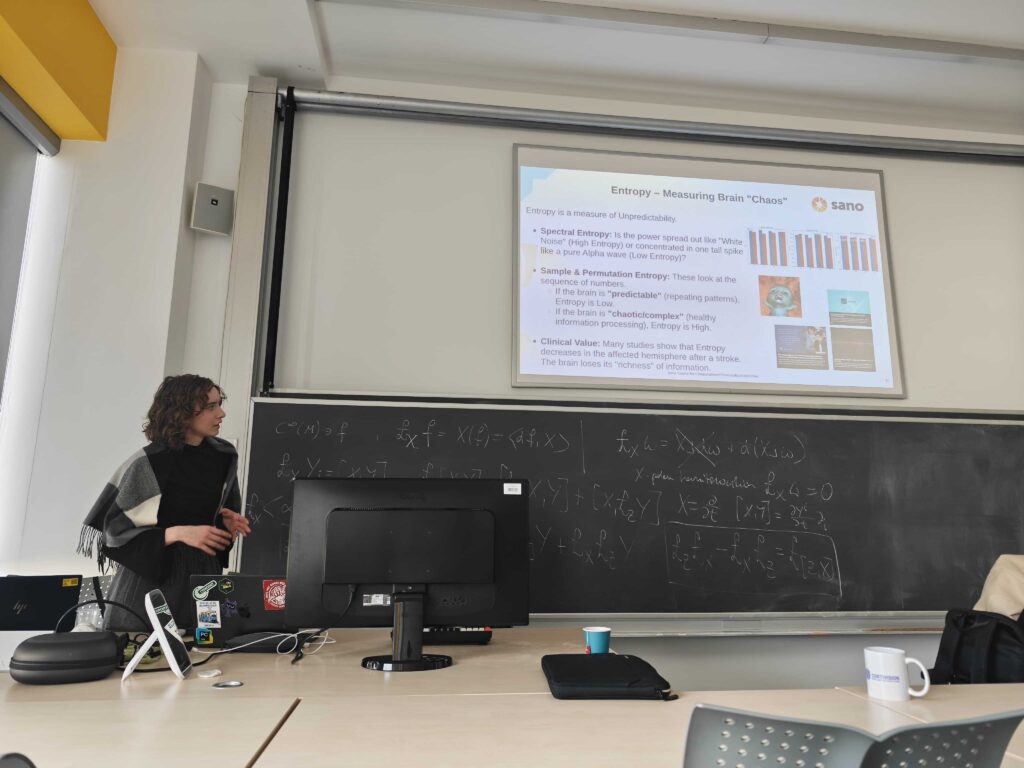
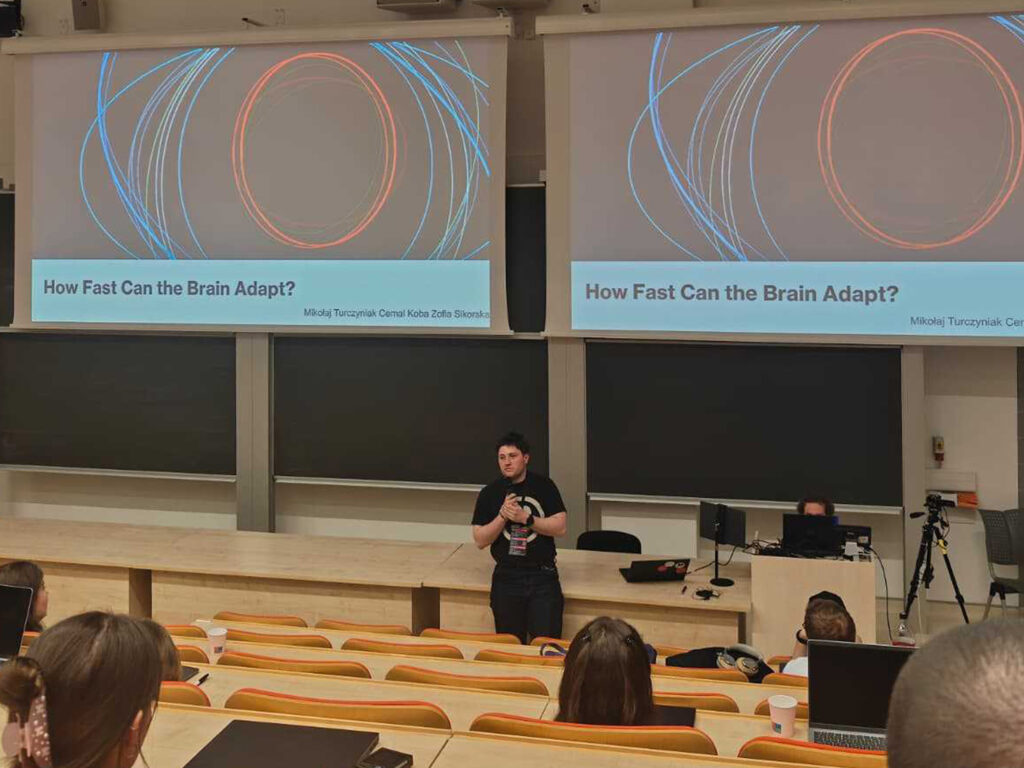
The Sano Centre for Computational Medicine team once again took part in Brainhack Warsaw. One of the featured projects, “How Fast Can the Brain Adapt? – Measuring Rapid Neuroplasticity with Eye Tracking and EEG using Python,” led by Cemal Koba (Sano) and Mikołaj Turczyniak (Sano and from the Jagiellonian University Doctoral School in Social Sciences (CogNes), and Zofia Sikorska (Jagellonian University Faculty of Biochemistry, Biophisycs and Biotechnology)
The project aimed to explore how quickly the human brain can adapt to new challenges—and whether such changes can be measured within just a few days.
Can the Brain Learn in Days?
The team focused on neuroplasticity, the brain’s ability to reorganize and adapt. While often associated with long-term learning, the project investigated whether similar changes could be observed over very short timescales.
Participants completed a visually-guided saccade tasks that has been shown to improve functional and structural brain connectivity, after 6 weeks of practice. Sano team examined if the same training induces any short-term changes in eye movements and brain activity. The data was collected with eye tracker and EEG.
Data That Reveals Change
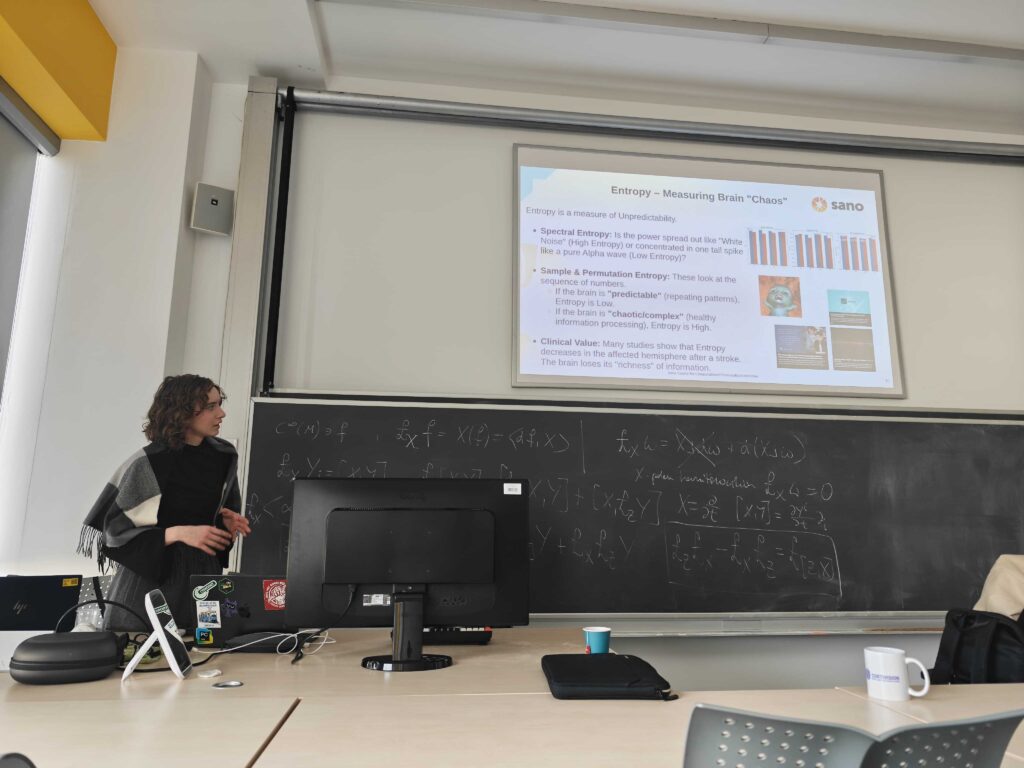
The analysis covered multiple levels: behavioral performance (such as accuracy and reaction time), eye-movement dynamics (including saccades and fixation stability), and neural activity. Even after a few repetitions, participants showed measurable improvement, suggesting that the brain rapidly optimizes its performance.
It’s a bit like learning to ride a bike—initially, movements are uncertain, but with each attempt, they become smoother and more precise.
From Raw Data to Insight
The project also served as an intensive hands-on learning experience. Participants worked through the full research pipeline: data collection, preprocessing, quality control, feature extraction, and statistical analysis.
They worked with eye-tracking and EEG data, learning how to extract meaningful information and interpret results. Each session combined short theoretical introductions with practical exercises, enabling immediate application of new knowledge.
Collaboration Across Disciplines
One of Brainhack’s greatest strengths was its interdisciplinary nature. Teams included participants with backgrounds in neuroscience, psychology, data science, and machine learning, reflecting how modern research operates in practice.
Participants also learned best practices in data organization, documentation, and building clear analytical pipelines—essential skills in both academic and industry settings.
The project demonstrated that even short-term training can lead to measurable changes in behavior and brain function. This insight is valuable not only for researchers but for anyone interested in how learning and adaptation work.
Once again, Brainhack Warsaw proved that science can be both rigorous and inspiring—especially when it brings together people from different fields to explore complex questions together.