
Gaia AI Factory Inaugurated in Kraków
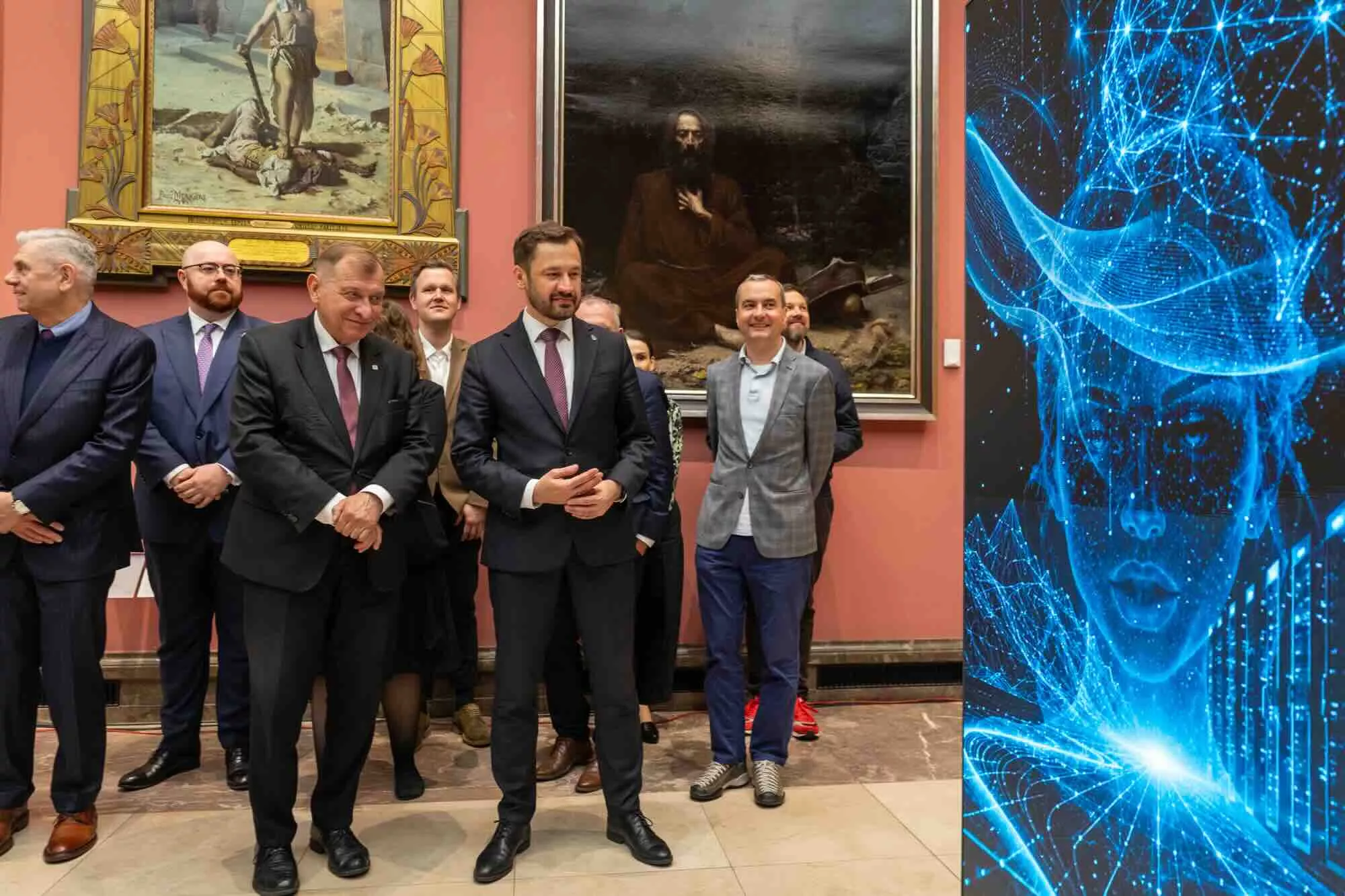
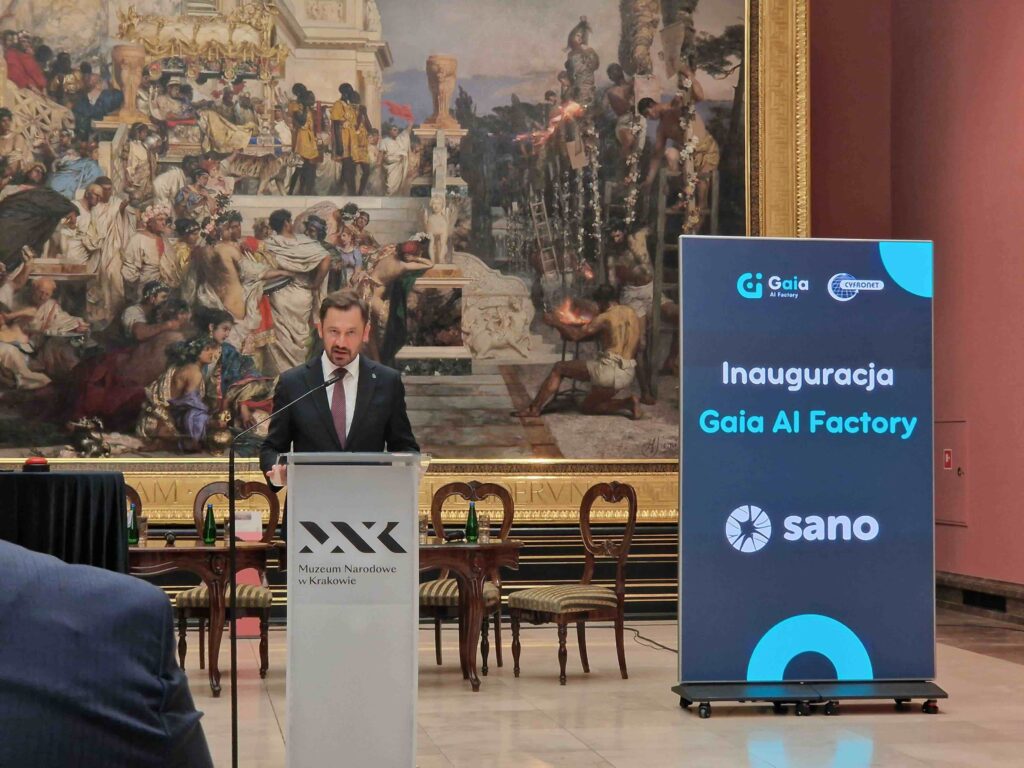
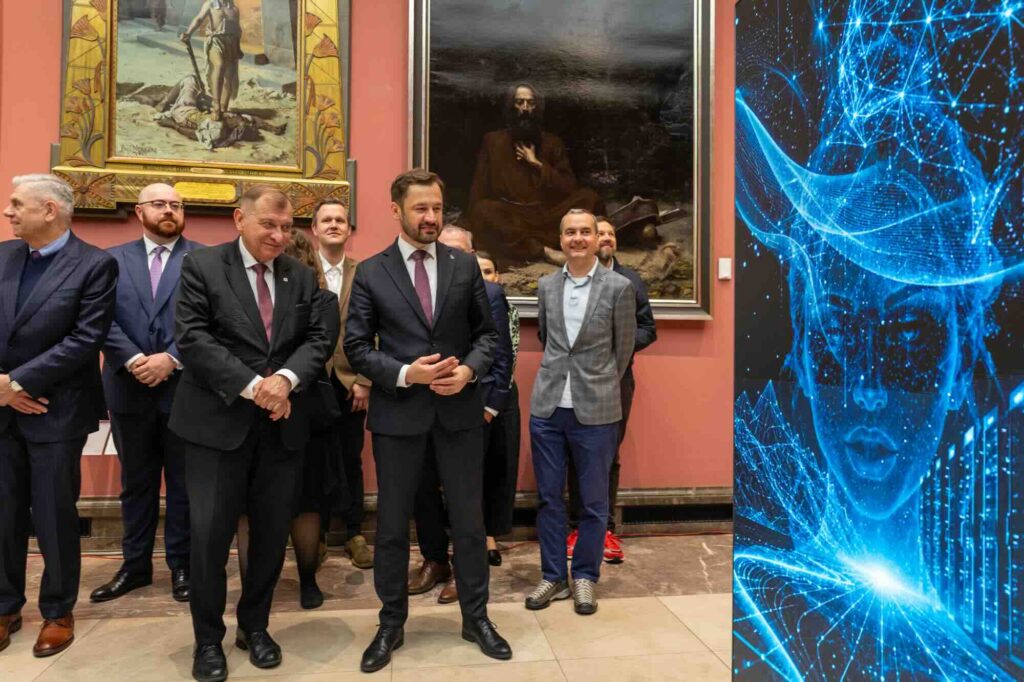
On May 11, 2026, Kraków’s Cloth Hall (Sukiennice) hosted the inauguration of the Gaia AI Factory project, opening a new stage in the development of artificial intelligence in Poland and Europe.
The event reflected a growing ambition to strengthen technological capacity and support advanced AI solutions within the European ecosystem.
Organized by the Academic Computer Centre Cyfronet AGH, the ceremony brought together representatives of public administration, academia, and business for a shared conversation about the future of AI and its role in addressing real societal and economic challenges. Among the guests were the Mayor of Kraków, Aleksander Miszalski, the Rector of AGH University of Krakow, Prof. Jerzy Lis, the Deputy Minister of Science, Prof. Maria Mrówczyńska, and the Deputy Minister of Digital Affairs, Dr. Dariusz Standerski. The event was opened by Marek Magryś, Director of ACK Cyfronet AGH. Sano Centre for Computational Medicine, as a partner of the Gaia project, was represented by our Director, Maciej Malawski, underlining our commitment to using high‑performance computing in science and medicine.
What is Gaia AI Factory?
At the heart of the initiative liesGaia AI Factory – one of the most important European AI infrastructure projects currently being developed in Central and Eastern Europe. With a total value of 70 million euros, it combines a world‑class supercomputer with an innovation ecosystem that offers not only raw computing power, but also access to high‑quality data, advanced tools, training, advisory services, and support for real‑world implementations. In practice, this means that researchers, public institutions, and companies will be able to build and test complex AI models faster, safer, and on a much larger scale than before.
Gaia AI Factory will work in close cooperation with PIAST AI Factory in Poznań and LUMI AI Factory in Finland. Together, access to these three AI Factories is expected to accelerate the adoption of artificial intelligence and stimulate innovation.
A supercomputer with a mission
The new supercomputer, to be launched by the end of 2027 at Cyfronet AGH in Kraków, will be equipped with over one thousand GPU accelerators – specialised processors that are particularly well suited for training modern AI models. Thanks to this infrastructure, Kraków will become one of 19 European AI Factories and the second such hub in Poland, next to Poznań. However, Gaia AI Factory is not only about hardware. Around the machine, a living ecosystem will be built, in which interdisciplinary teams of researchers, engineers, and domain experts will support innovators and startups in designing, training, and improving their AI solutions.
source: ACK Cyfronet AGH. (2026, May 15). Inauguracja Gaia AI Factory [Video]. YouTube. https://www.youtube.com/watch?v=ZK7h3_nn1Xg
Where will AI from Kraków be used?
Gaia AI Factory is designed to support the development of practical AI applications in key areas that directly affect our everyday lives. In health, it will support more accurate diagnostics, analysis of medical data, and the development of personalised therapies tailored to individual patients. In public administration and security, it will help analyse large data sets and streamline public services, for example by speeding up decision‑making or better targeting support.
In education, the project will contribute to building digital skills and provide access to open AI tools that can be used by teachers, students, and lifelong learners. In environmental protection and the space sector, AI will assist in the analysis of satellite data and climate monitoring, enabling faster detection of changes and risks. Finally, in the economy, Gaia AI Factory will support startups, industry, and the development of new products based on AI, helping companies turn innovative ideas into solutions ready for the market.
The Gaia AI Factory project is being implemented under the European EuroHPC Joint Undertaking programme (19 AI Factories across different European countries). The consortium behind Gaia AI Factory brings together a broad range of stakeholders active in the field of artificial intelligence, including:
- Akademickie Centrum Komputerowe Cyfronet (project leader)
- Wydział Technologii Kosmicznych Akademii Górniczo-Hutniczej w Krakow
- Wrocławskie Centrum Sieciowo-Superkomputerowe Politechniki Wrocławskiej, Centrum Informatyczne TASK Politechniki Gdańskiej
- Interdyscyplinarne Centrum Modelowania Matematycznego i Komputerowego Uniwersytetu Warszawskiego
- Narodowe Centrum Badań Jądrowych
- Naukowa i Akademicka Sieć Komputerowa NASK-PIB
- Ośrodek Przetwarzania Informacji OPI-PIB
- Sano – Centrum Zindywidualizowanej Medycyny Obliczeniowej – Międzynarodowa Fundacja Badawcza
- Małopolskie Centrum Biotechnologii Uniwersytetu Jagiellońskiego
- Instytut Matki i Dziecka
- Krakowski Park Technologiczny.