
Sano at the 6th GEMINI consortium meeting in Rotterdam
Advancing digital twin infrastructure for in silico medicine and stroke care
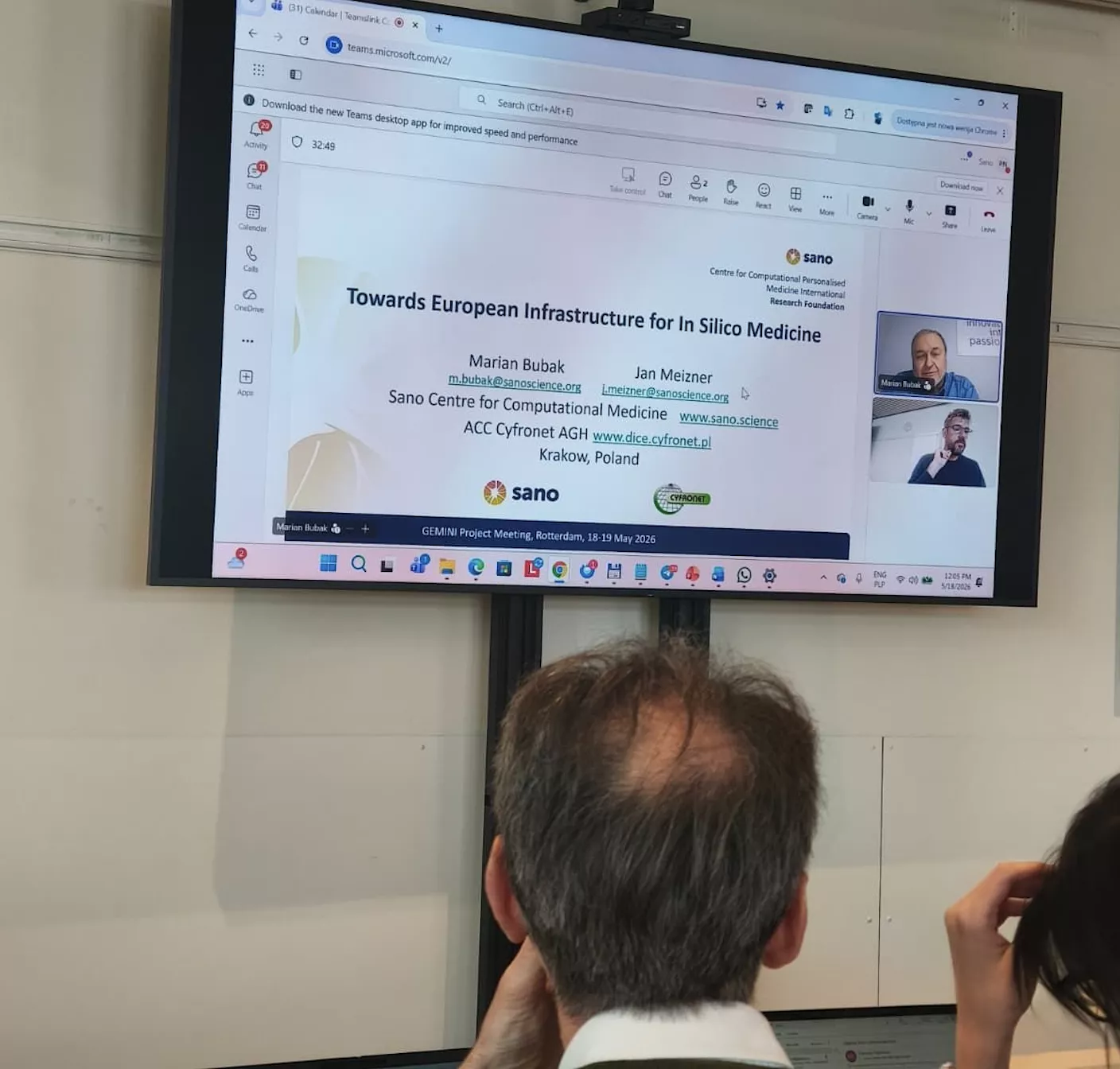
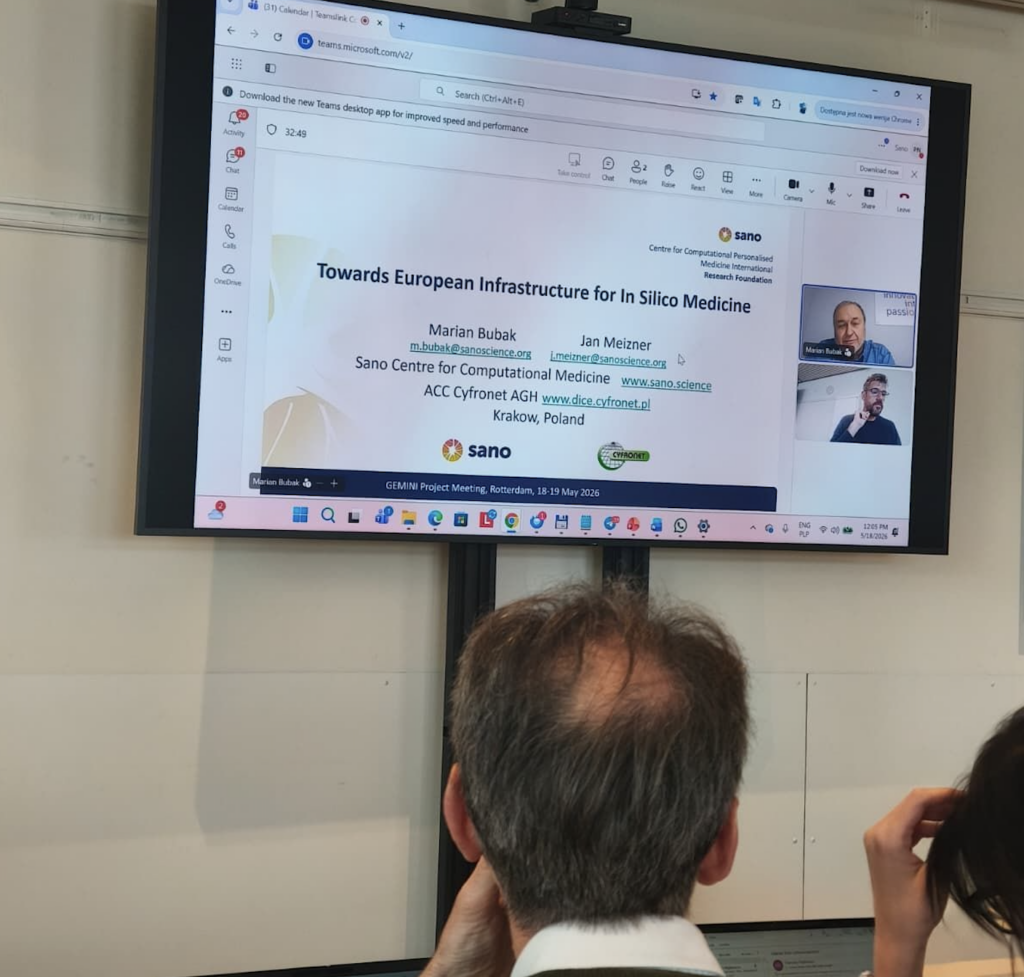
Sano’s representatives contributed actively to the latest GEMINI consortium meeting, held on 18–19 May at Erasmus MC in Rotterdam, which brought together partners working on clinically meaningful digital twins for cerebrovascular disease. During the meeting, Marian Bubak and Piotr Nowakowski presented key findings from the joint work “Towards European Infrastructure for In Silico Medicine”, prepared together with Jan Meizner, situating Sano’s experience in high‑performance computing, data integration and multiscale modelling within the broader vision of a European ecosystem for in silico medicine. Their talk was embedded in discussions across GEMINI work packages, where partners reported progress on data harmonisation, HPC execution, vessel wall mechanics, CFD modelling, software delivery, clinical trial preparation and model validation, all aimed at building robust and trustworthy digital twin pipelines.
The programme in Rotterdam also featured keynote presentations by Daniel Bos on intracranial arteriosclerosis and its links to ischaemic stroke, and by Wouter Huberts on surrogates, verification, validation and uncertainty quantification, which framed the meeting around clinical relevance and model credibility in computational healthcare. A recurring theme throughout the sessions was alignment: between clinical needs and technical development, between heterogeneous data sources and modelling workflows, and between individual GEMINI pipelines and the shared infrastructure that will ultimately support digital twins in real‑world clinical practice.
In parallel, the consortium discussed how to better communicate digital twin concepts beyond the expert community, exploring ways to improve public understanding and acceptance of these technologies—an area where Sano has been increasingly active through its work on digital twins and outreach in the in silico medicine community. The Rotterdam meeting thus marked an important step forward both scientifically and organisationally, reinforcing Sano’s role in a multi‑country consortium that is working to turn digital twin research into clinically impactful tools for stroke diagnosis and treatment.