
Tracking Stroke Severity Through Oculomotor Variability
ESOC 2026
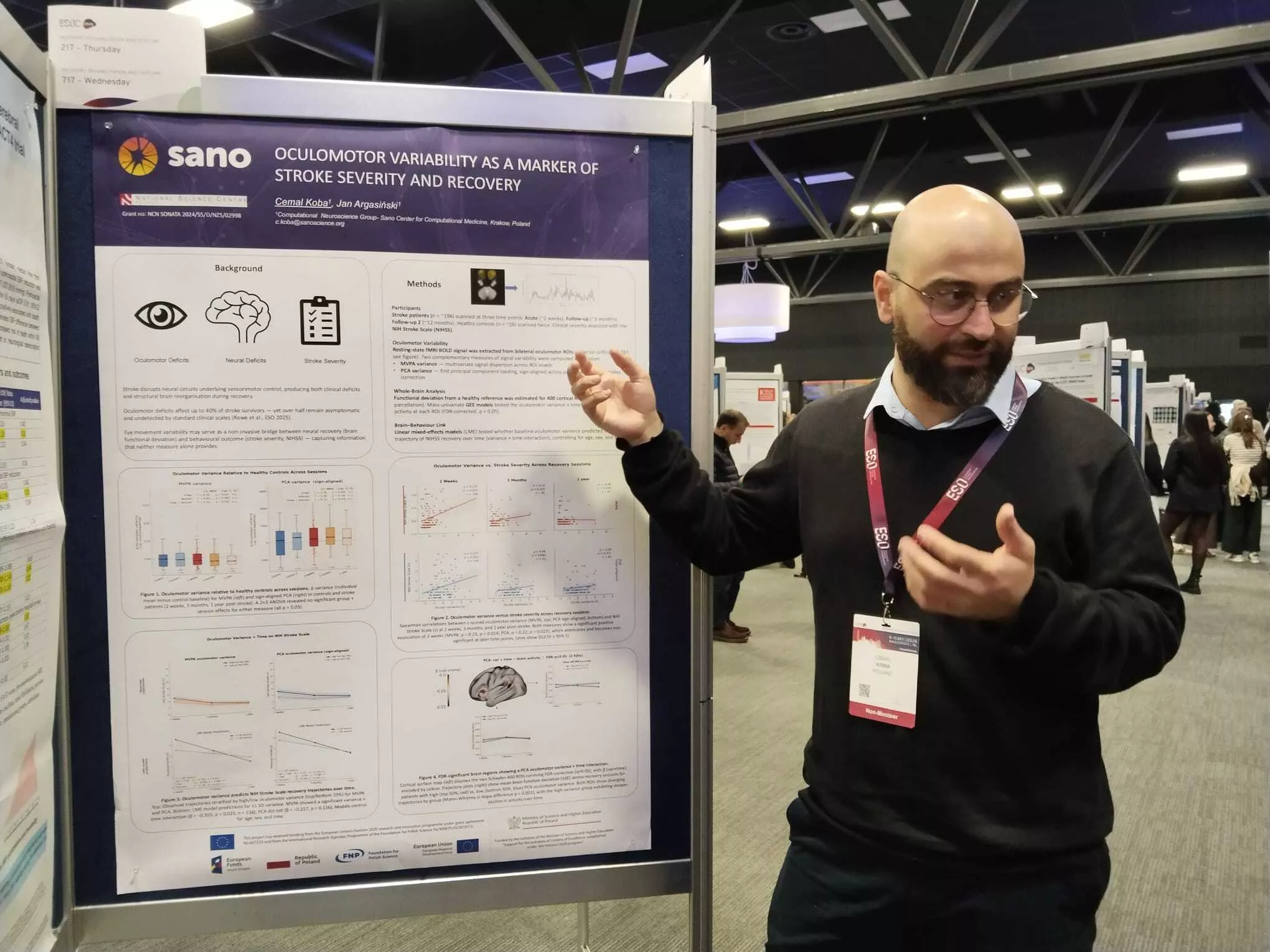
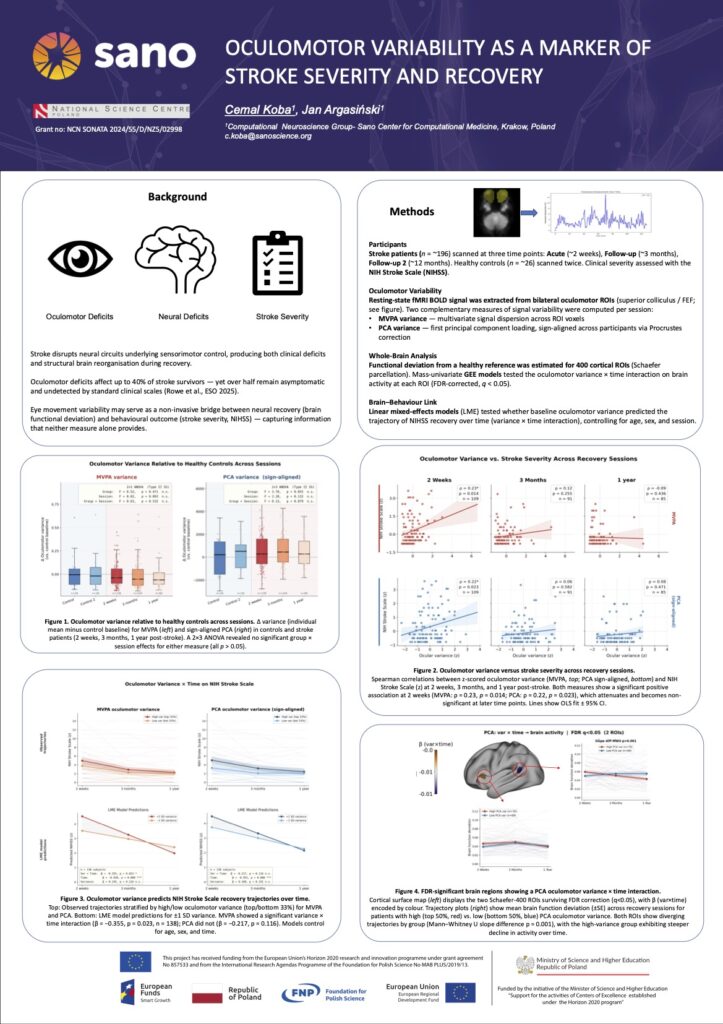
At the 12th European Stroke Organisation Conference (ESOC 2026) in Maastricht, Cemal Koba from the Computational Neuroscience group at Sano presented a poster titled “Oculomotor Variability as a Marker of Stroke Severity and Recovery.” The work showcased the potential of eye movement analysis as a tool for assessing stroke severity and monitoring recovery, demonstrating how oculomotor measures can deepen understanding of post‑stroke outcomes. In simple terms, oculomotor variability refers to subtle changes in how a person’s eyes move, which can reveal important information about brain function after a stroke. Quote from Cemal about the poster, its motivation, or the key takeaway.
A major meeting point
ESOC 2026 in Maastricht brought together leading experts from diverse disciplines, institutions, and countries to exchange knowledge on the latest advances in stroke research and care. With a rich programme featuring major clinical trials, workshops, educational sessions, poster presentations, and expert debates, the conference offered a dynamic space for scientific dialogue and collaboration, as well as broad insight into emerging directions in stroke science and clinical practice.
New conversations and perspectives
Beyond presenting his research, Cemal used the conference to keep up with recent academic and industry developments in the field. Discussions during the meeting also touched on visual deficits after brain stroke, an important area of research closely linked to work on perception, eye movements, and functional recovery.
Continuing collaboration in the Netherlands
During his stay in the Netherlands, Cemal also met with Matthias Nau, Assistant Professor of Computational Cognitive Neuroscience at Vrije Universiteit Amsterdam, to discuss results from his ongoing Sonata project. Given that Matthias Nau’s research includes active vision, memory, imagery, and behavioural measures such as eye tracking, the meeting provided a particularly relevant context for exploring future directions and synergies with Cemal’s work.