
Sano’s legal team at ICAIL 2026
Law, AI and healthcare
At ICAIL 2026 in Singapore, hosted by Singapore Management University, Sano Centre for Computational Medicine brought a practical, voice into the global conversation on artificial intelligence and law.
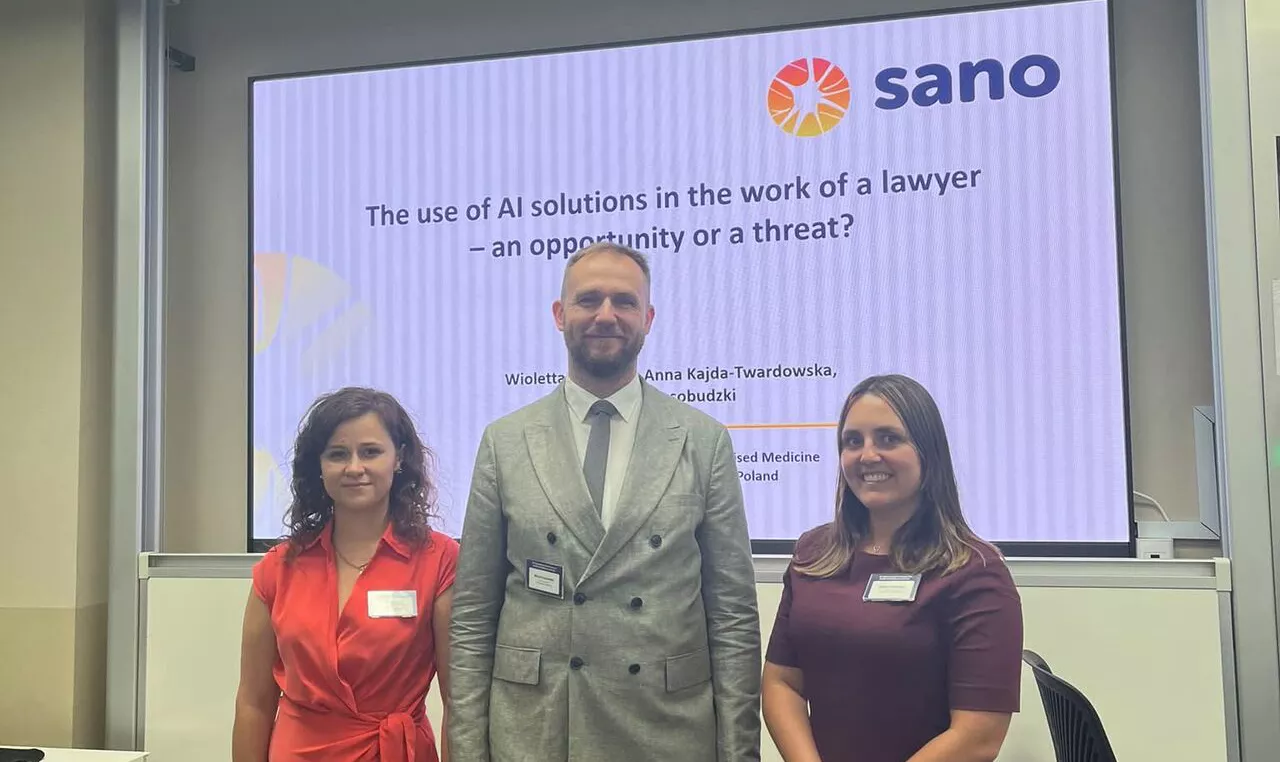
Tutorial: opportunity or threat The use of AI solutions in the work of a lawyer – an opportunity or a threat?
Together, Anna Kajda‑Twardowska, Wioletta Niwińska and Michał Kosobudzki led a tutorial titled “The use of AI solutions in the work of a lawyer – an opportunity or a threat?”, concentrating on how artificial intelligence is currently used and how it can be effectively applied in lawyers’ day-to-day work.
The tutorial focused on practical aspects of the use of artificial intelligence, including the management of AI implementation processes and the risks associated with its use, such as data protection, confidentiality, bias, and compliance with professional obligations.
The central question – opportunity or threat – quickly proved to be non‑rhetorical. Intense discussions with participants showed that the answer depends on how AI is introduced and governed: whether organisations create clear internal rules, supervision and review processes, or whether they leave experimentation entirely to individuals.
A key theme of the tutorial was the need for practical internal regulations on AI use, so that technology becomes a trusted assistant rather than an uncontrolled shortcut in legal practice.
Shared questions in a global community
ICAIL’s programme covered explainability, ethics, regulation, compliance and generative AI across different jurisdictions.
What stood out during the tutorial and subsequent conversations was how similar the core questions are worldwide: how to trust AI’s outputs, how to protect clients and sensitive data, and how to align innovation with professional responsibility.
The workshop made clear that, despite differing legal systems, lawyers everywhere strive to use AI while maintaining the highest standards of conduct and client safety.
Many participants were seeking answers to questions about how to use AI responsibly, mitigate risks, and implement AI tools within their organisations in a way that positions AI as an opportunity to improve the quality of services rather than as a threat to the day-to-day work of law firms, legal departments, and public institutions.
Bridging innovation and regulation
During main conference (the Karl Branting Industry Meeting), Michał Kosobudzki spoke from the perspective of an in‑house lawyer at Sano, an NGO that connects advanced AI technologies with Poland’s demanding healthcare sector.
He described the tension between the world of scientists and researchers, where for the sake of innovation “everything is permitted”, and the world of lawyers, where the dense regulatory landscape can lead to the feeling that “nothing is permitted”.
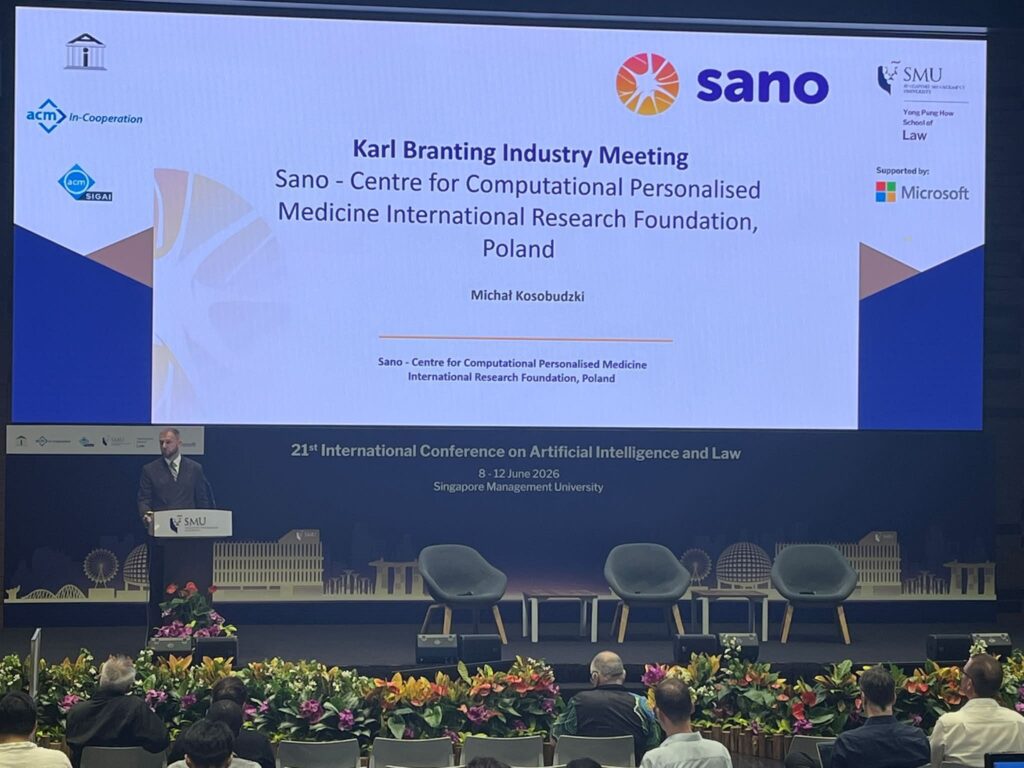
His message was that, in the era of the EU AI Act and standards such as ISO 42001, legal departments cannot be roadblocks that simply say “no”. They must become partners in innovation, helping organisations find a golden mean – navigating complex regulation while still enabling ambitious AI projects in areas like healthcare.
This partner role is particularly crucial in sectors where mistakes have direct consequences for patients and public trust, making responsible AI governance a core part of both legal and technological work.
Conversations that drive change
For Sano’s legal team, the most valuable part of ICAIL 2026 were the sharp questions during the tutorial and the many one‑to‑one conversations in between sessions.
These exchanges showed that the global AI‑and‑law community shares many of the same concerns, asks similar questions, and faces similar challenges in finding ways to use artificial intelligence tools effectively and safely in legal contexts. .
By sharing their experience from the intersection of AI and law , Sano’s lawyers helped demonstrate that the future of legal practice with AI will be built through exactly this kind of open, substantive dialogue – whether in Singapore, Kraków, or any place where data, technology and law now meet.