Hands-on angiography training at ISIIC 2026
At the International Summit on Imaging and Intervention in Cardiology in Katowice, Sano invited participants to try its high-fidelity coronary catheterisation simulator.
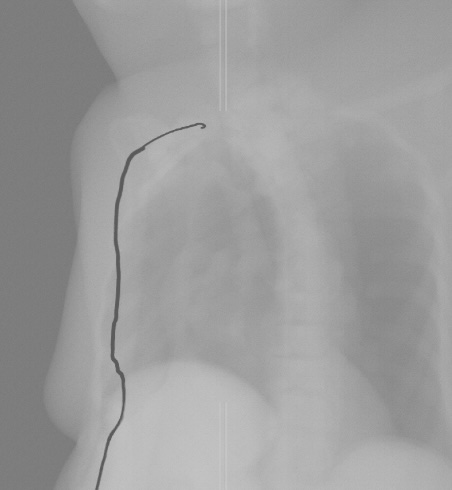
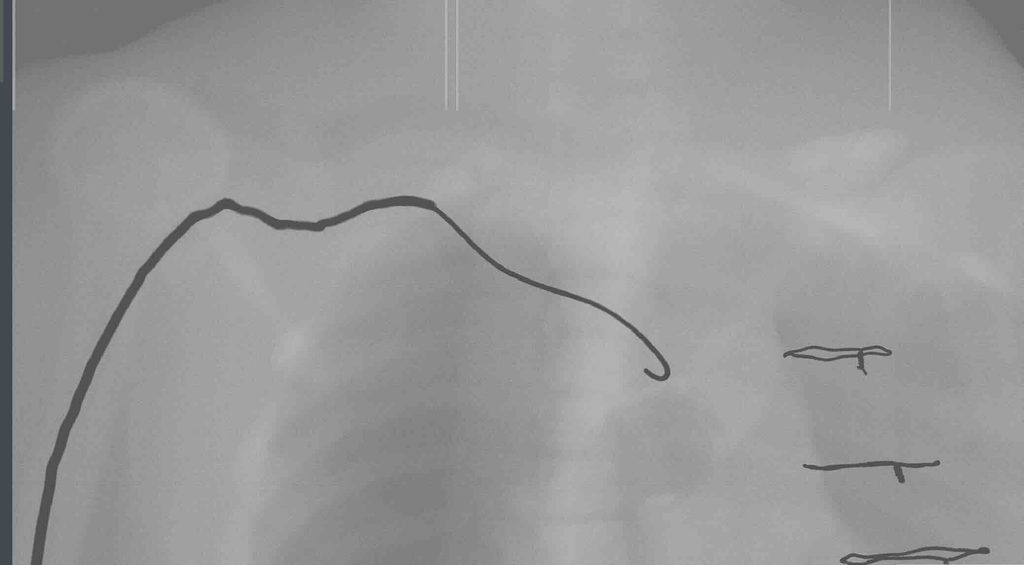
Before a cardiologist can open a blocked coronary artery, they must learn to steer thin, flexible wires and tubes from an artery in the wrist or groin all the way to the heart. During the whole journey they see the instrument only as a shadow on a grey X-ray image. Mastering this takes a great deal of practice, and much of it traditionally happens in the cath lab, with a real patient on the table.
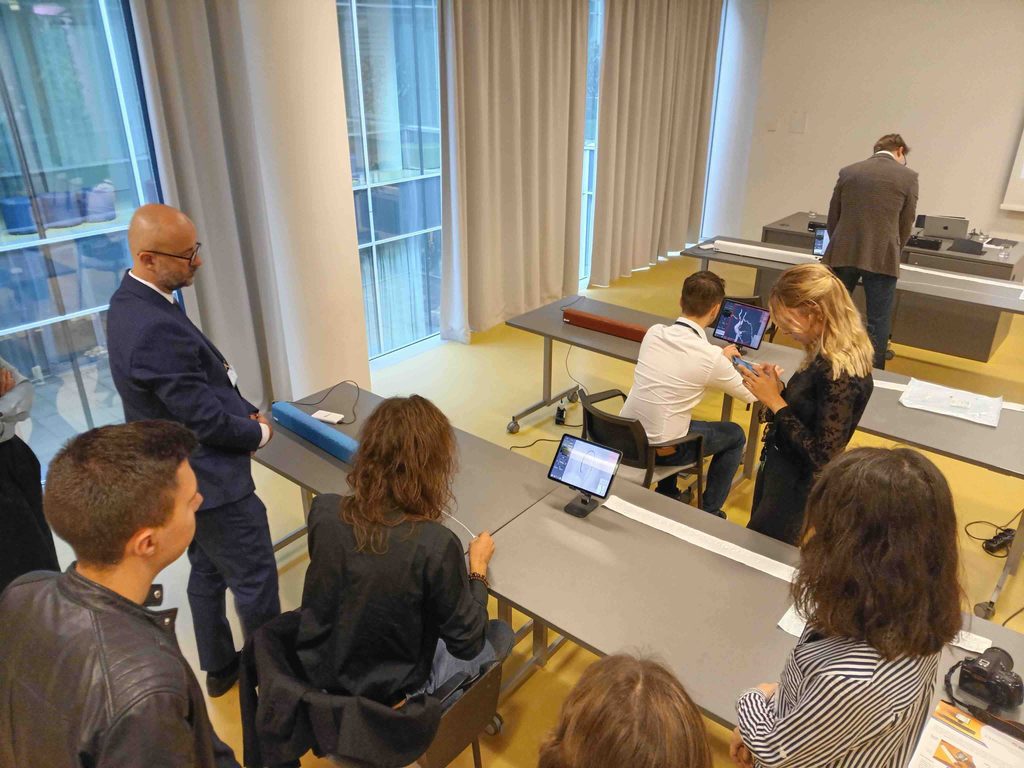
On Friday, 11 September, Sano demonstrated that this kind of learning can take place beyond traditional clinical settings. At the International Summit on Imaging and Intervention in Cardiology (ISIIC 2026), held on 10–11 September at the Silesian Museum Conference Centre in Katowice, Sano delivered a CardioSim workshop titled “A coronary catheterisation simulator supporting the training of future interventional cardiologists.” The session was led by Krzysztof Karwat (St. John Paul II hospital, Kraków) and Sano’s Tomasz Gubała, Adam Błasiak and Natalia Skowron.
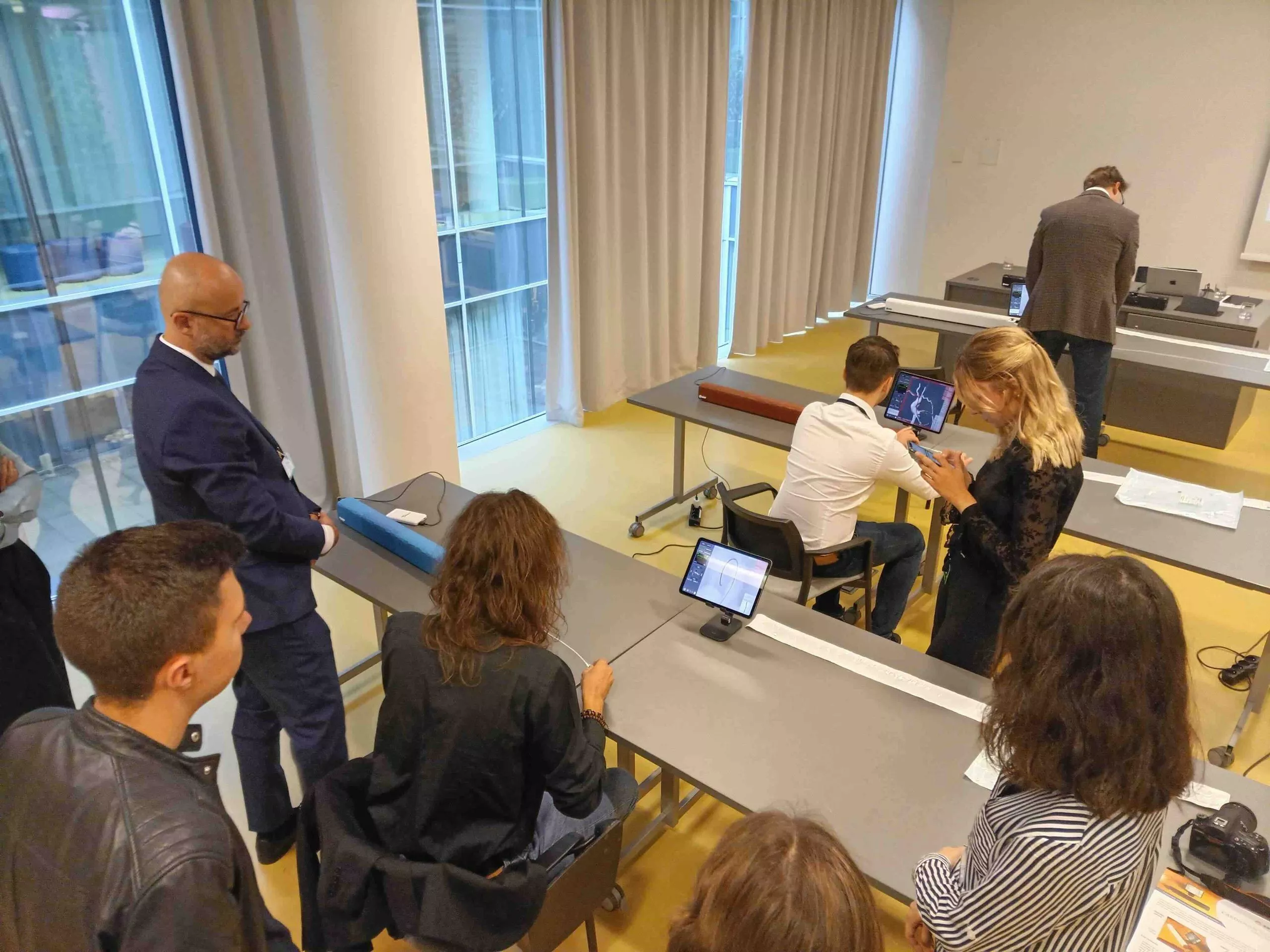
The aim of the session was to present a modern approach to training in interventional cardiology based on high-fidelity simulation. Participants had the chance to work directly with the catheterisation simulator developed at Sano. Pilots have long trained on flight simulators before taking the controls of a real aircraft, and high-fidelity simulation brings a similar idea to interventional cardiology. In the cath lab, every attempt involves a real patient, X-ray exposure and costly disposable equipment. On the simulator, trainees could repeat the same procedure many times without radiation, extra costs or any risk to patients.
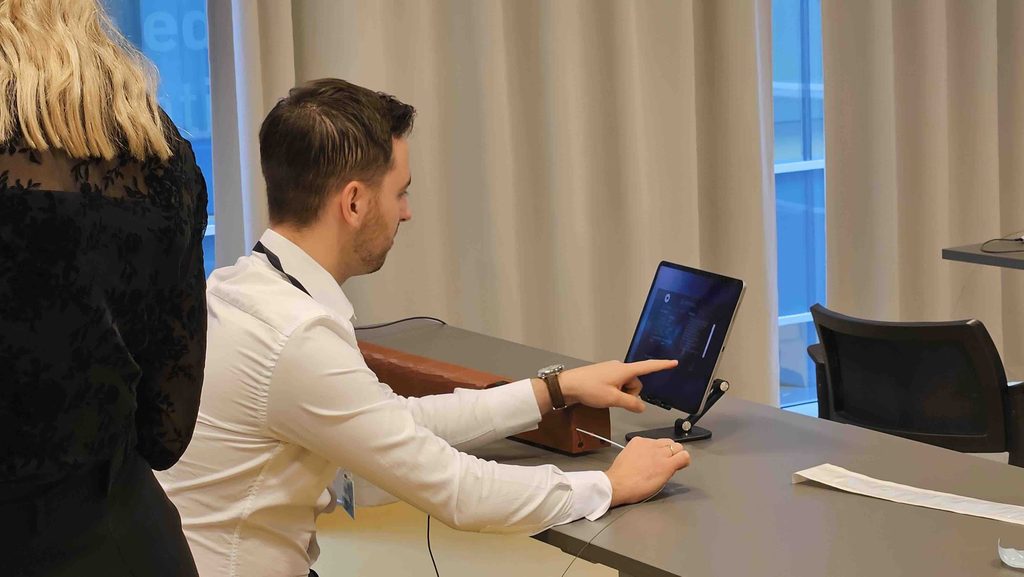
“Catheterisation is a manual skill, and manual skills grow with repetition. Our simulator lets trainees practise with real instruments as often as they need, without radiation and without any risk to a patient,” says Tomasz Gubała, who leads the technical development of the simulator.
“Additionally, our training focuses on preventing over a dozen of the most common clinical errors and developing effective responses to unforeseen situations. This better prepares future cardiologists, thereby lowering stress levels, increasing confidence, and ultimately reducing patient complications.”
Real instruments, virtual patient
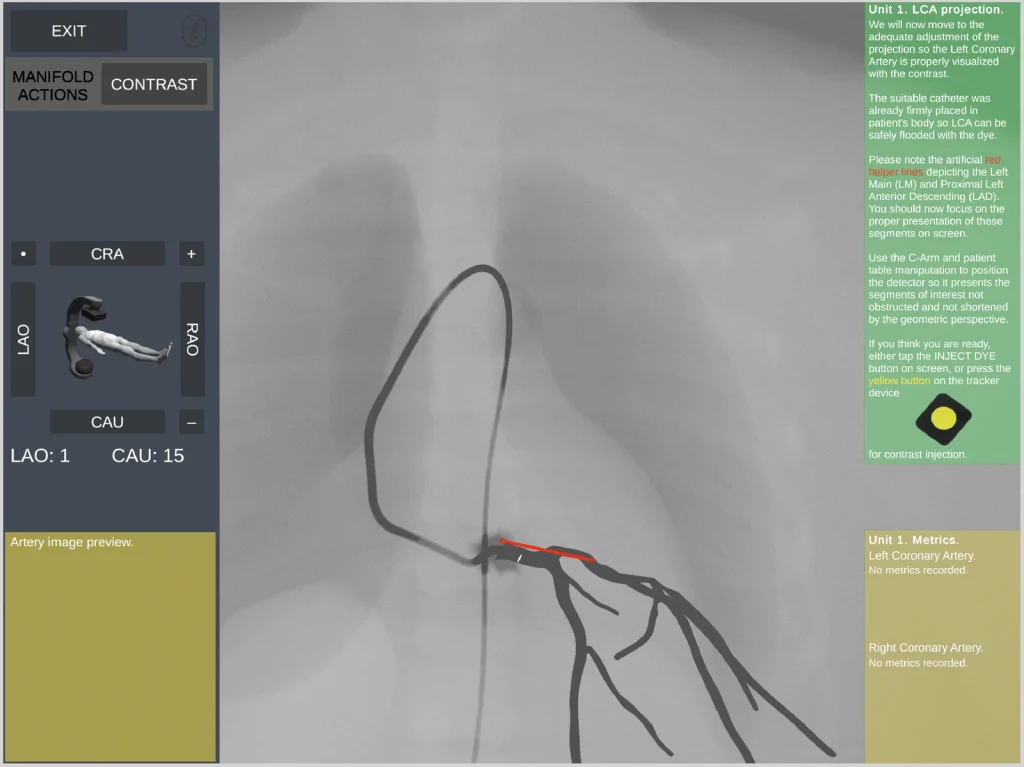
Participants held in their hands the same kind of catheters and guidewires that are used in hospitals. A compact tracking station followed every push, pull and twist of the instruments in real time. A tablet turned these movements into a physics-based simulation of the instruments inside the patient’s body and displayed an X-ray view that looks much like a real fluoroscope screen. The tracking station also lets the user steer the C-arm and inject contrast, which makes the blood vessels visible on the image. The scenarios are built on real patient anatomies, so each case brings its own navigational challenges: tortuous arteries, bypass opacification, artherosclerosis plaque, high breath rates, and more. Dynamic haptic feedback provides adequate resistance and friction levels to the instruments, stimulating the tactile feeling in the operator’s fingers. Because the instruments are genuine, and the feedback closely reflects the physics of the catheterisation, the trainee’s hands and eyes learn to work together just as they would during a real procedure.
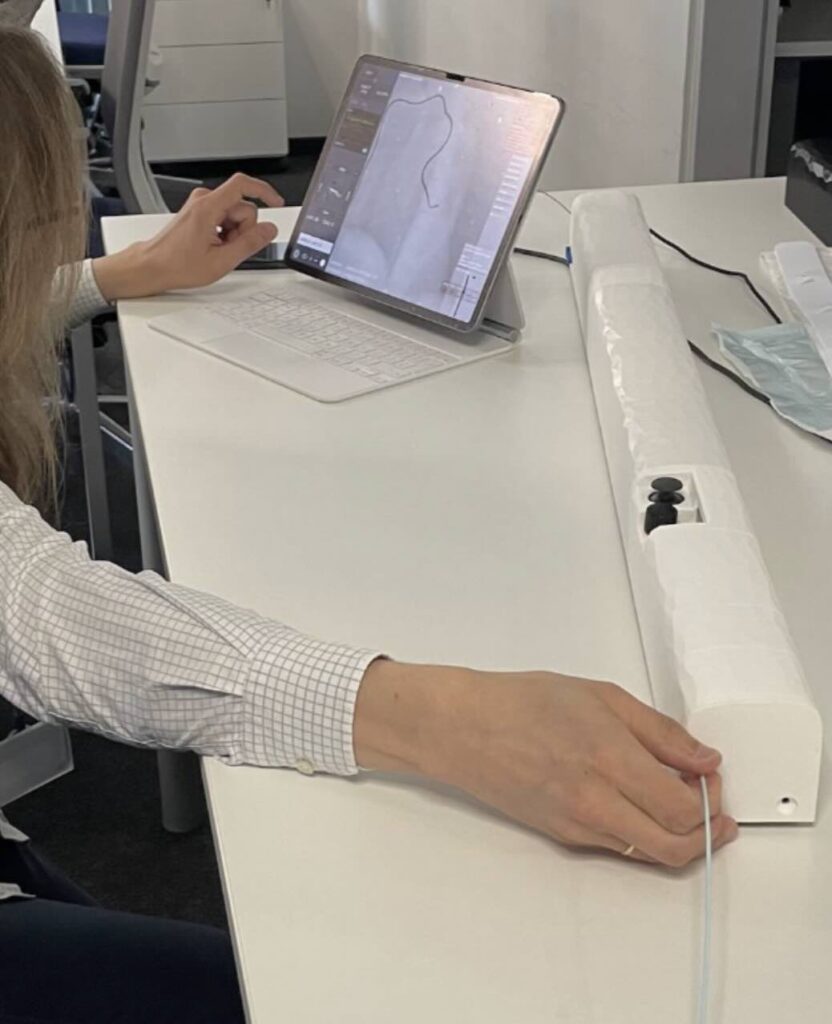
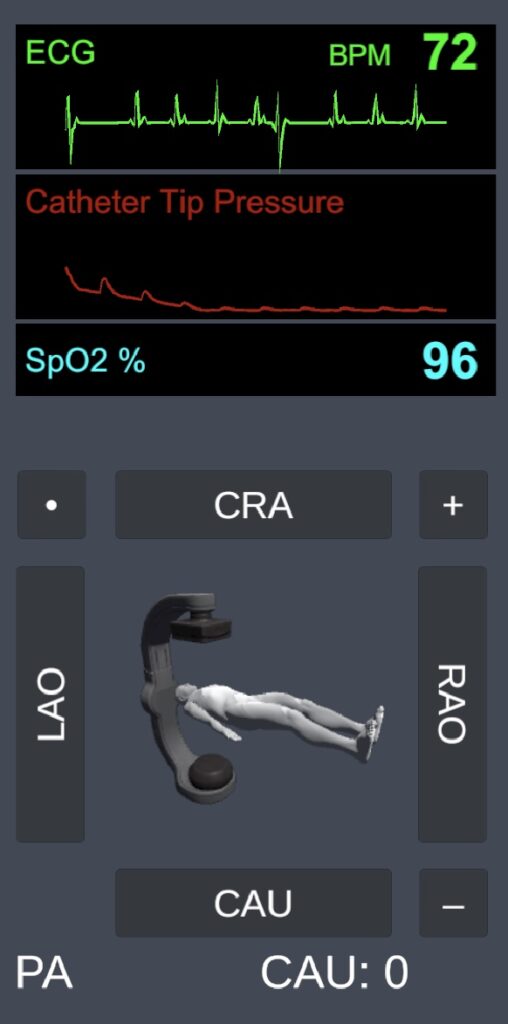
Increasing complexity levels, from first access to complex cases, with feedback
During the workshop, participants could practise the core skills of the procedure: steering the catheter, handling the guidewire, injecting contrast and reading fluoroscopic images. The training scenarios, curated by an experienced physician, are arranged in several levels of growing difficulty.
Various catheter shapes, sizes and diameters, trained across eight cases of coronarography, with three navigational routes, gave the participants great variety of experienced scenarios. Learning the adequate projection angles, proper opacification techniques, and avoidance of the most common mistakes, provided an informative lesson for junior physicians and students of medical collages alike.
Each exercise ended with feedback. The built-in performance analytics on the tablet assessed precision, safety and efficiency in an objective way. This helps trainees see which elements of the procedure matter most, avoid typical mistakes and follow the protocol consciously.
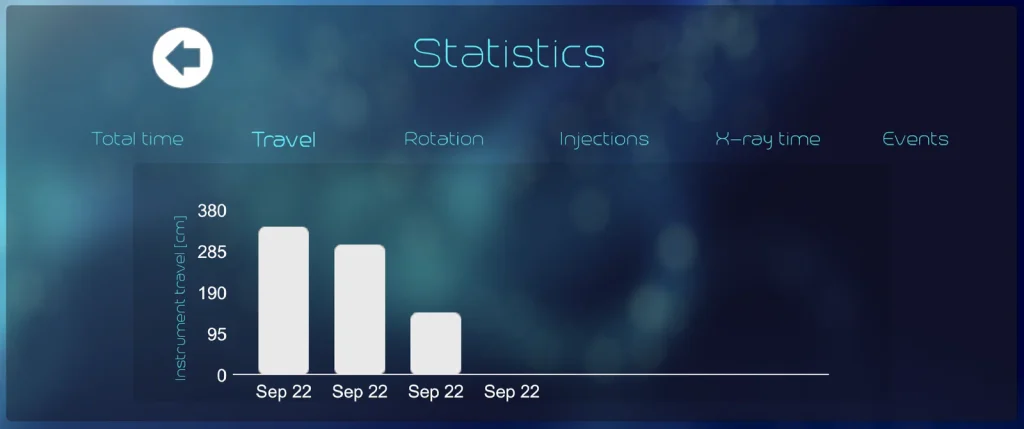
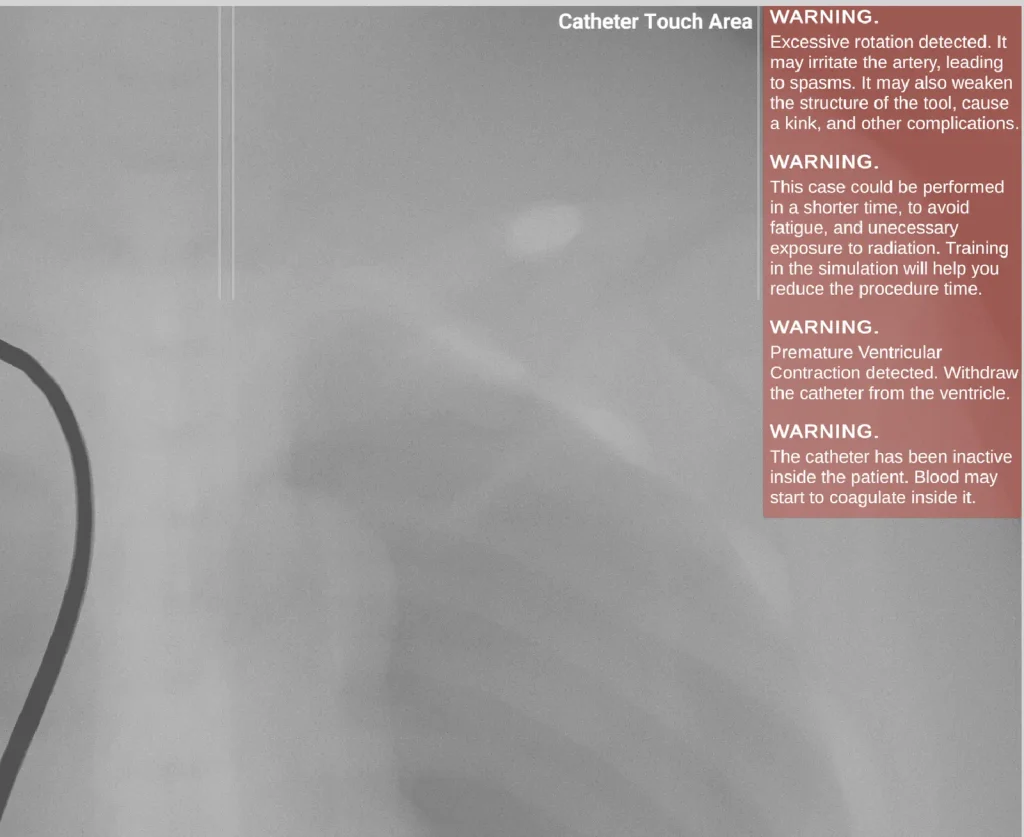
The simulator has been designed as an affordable and portable alternative to conventional angiography training stations. It can be used in hospitals, universities, training centres and clinical workshops, and it even allows self-paced practice at home. The simulator is currently in the final stages of development and user testing, and meetings with clinicians such as the ISIIC workshop form an important part of that work.
Sano supported ISIIC 2026 as a conference partner, and the CardioSim workshop was our way of adding a practical, hands-on element to its programme. We warmly thank the organisers for the cooperation and all participants for taking part in the session.