
Dominik Czaplicki on why we still have not beaten cancer
„Why Haven’t We Beaten Cancer Yet?” - fourth episode of the Twin Things Podcast
Fourth episode of the Twin Things Podcast
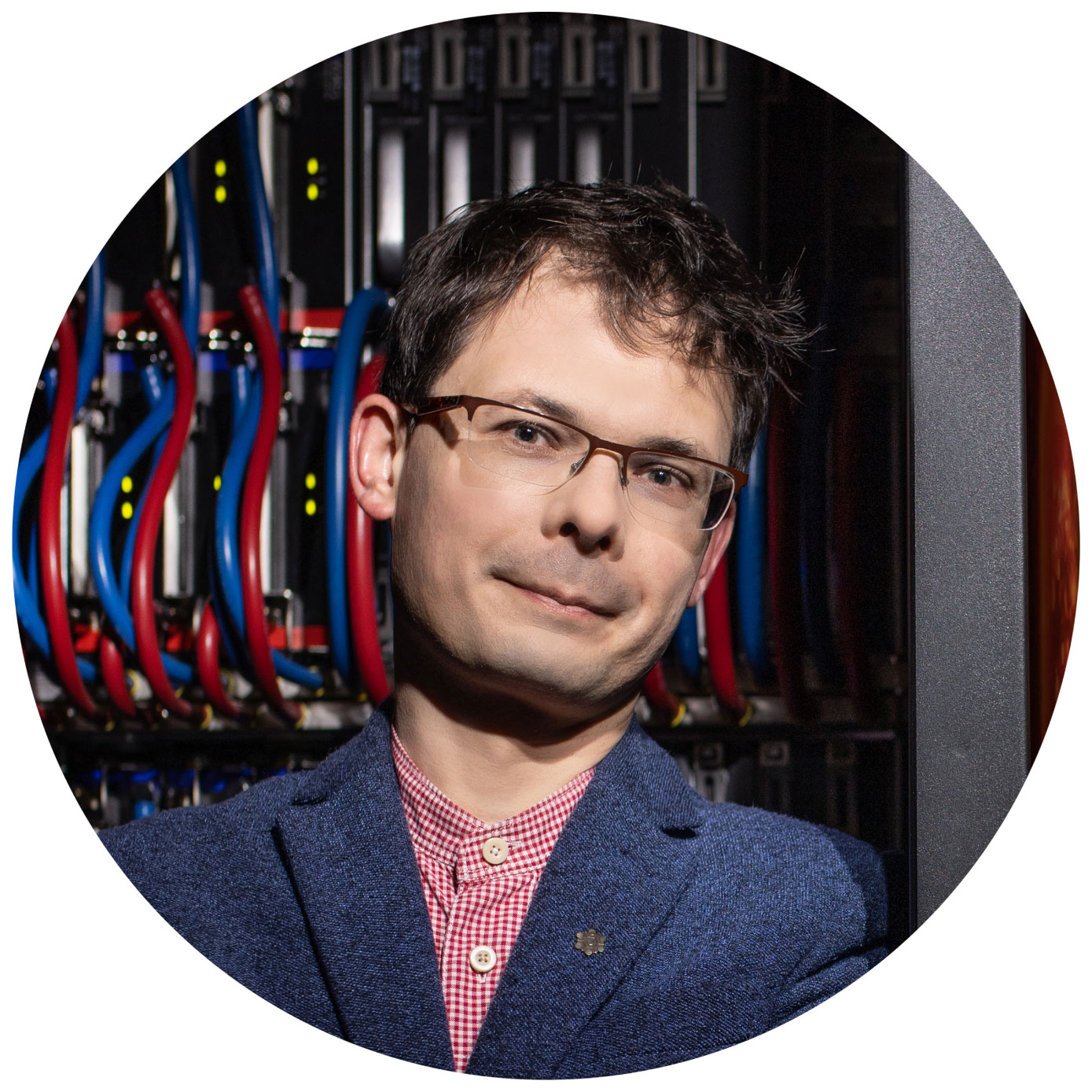
In the fourth episode of the Twin Things Podcast(‘Dlaczego wciąż nie wygraliśmy z rakiem?‘), Dominik Czaplicki takes listeners on an intellectual journey through the world of modern oncology – from cell biology and tumour evolution to thermodynamics, immunotherapy, and computational medicine. The guest and the host, both affiliated with the Sano Centre for Computational Medicine, explore a fundamental question: why, despite decades of research and tremendous technological progress, do cancers remain one of the most difficult groups of diseases to manage.
Cancer as a natural consequence of multicellular life
The conversation begins with the claim that cancer is not a mere “error” but an almost inevitable consequence of multicellular life. Every human being is made up of trillions of cells that must constantly cooperate and follow shared rules – yet it takes only one cell to “rebel” and start acting purely in its own interest to trigger a cancerous process. In this sense, cancer arises from the tension between the autonomy of a single cell and the well-being of the organism as a whole.
A history of changing ideas about cancer
The podcast offers a broad historical perspective on how our understanding of cancer has evolved. In the past, people tried to explain cancers through humoral theory, temperament, or personality traits, which now sounds archaic but illustrates the human need for simple explanations. In the nineteenth century, cancer began to be seen as a disease of the cell, and the twentieth century – following the discovery of DNA – brought the somatic mutation theory, which held that cells accumulate genetic alterations that gradually lead to a loss of control over cell division. Although this was a breakthrough, genetics alone turned out to be insufficient – cancers are far more complex than a simple “set of mutations”.
Cancer as an ecosystem
One of the key themes of the discussion is the modern view of cancer as a complex ecosystem. A tumour is not just a cluster of abnormal cells but an actively organised tissue that recruits blood vessels, reprogrammes immune cells, and builds its own microenvironment that supports growth. Cancer cells can “persuade” healthy cells to work on their behalf – for example, by inducing angiogenesis, the formation of blood vessels that supply oxygen and nutrients, and by weakening the local immune response.
Cancer as accelerated evolution
The speakers repeatedly emphasise that tumour development can be understood as evolution happening at an accelerated pace within a single body. Mutations generate diversity, while the organism’s environment – such as low oxygen, limited nutrients, and attacks from the immune system – selects those cell variants that cope best with constraints. As a result, increasingly aggressive clones emerge that can metastasise, meaning they colonise new parts of the body, making cancer an example of Darwinian selection operating inside one person.
Thermodynamics and the bifurcation point
An original aspect of the conversation is the use of concepts from thermodynamics and nonlinear systems theory to describe how cancers arise. A cell usually maintains a dynamic equilibrium with its surroundings, but under prolonged stress, such as chronic inflammation, radiation, or accumulated DNA damage, it can reach a critical threshold – a so‑called bifurcation point. At that moment, it has two possible fates: death or a transition to a higher level of organisation, in which it becomes part of a new, self‑sustaining system – the cancerous tissue. This process is compared to a spinning top that remains stable for a long time but, once a certain threshold is crossed, suddenly loses balance and falls over.
Immunotherapy – harnessing the body’s natural defences
A substantial part of the episode is devoted to immunotherapy, i.e. treatments that harness the immune system. Cancer cells are hard to detect because they arise from the body’s own tissues and do not generate a strong danger signal, but modern therapies can artificially amplify that signal. Some approaches “highlight” cancer cells for the immune system, while others modify immune cells outside the body so that, once infused back into the patient, they can more effectively attack the tumour.
Bacteria as a therapeutic tool
An especially intriguing thread is the idea of using bacteria, particularly Salmonella, to treat cancers. These bacteria prefer low‑oxygen environments typical of tumours and at the same time trigger a strong alarm signal for the immune system. This means they can help “guide” immune responses towards the tumour, and they can also serve as carriers for anti‑cancer drugs; in preclinical studies, particularly promising results have been seen in melanoma. Computational models help predict how such therapies will behave in the body before they move into clinical trials.
The diversity of cancers and the ndividuality of patients
The conversation strongly reinforces the message that “cancer” is not one disease but a vast group of biologically distinct conditions. Even tumours that share the same name can behave in dramatically different ways – for example, neuroblastoma, a childhood cancer, can regress spontaneously in some patients while being highly aggressive in others. This underlines the need for personalised treatment strategies and an individual approach to each patient and their tumour.
Cancer as a chronic disease and the role of computational medicine
In the final part of the discussion, the speakers reflect on the fact that cancers can increasingly be approached not as an inevitably fatal condition but as long-term conditions that can be managed over time. In many situations, the goal of medicine will not be to eradicate every last cancer cell but to keep the disease under durable control, monitor relapses, and maintain a high quality of life for patients. The speakers highlight the importance of a systemic approach that brings together biology, physics, mathematics, computer science, and medicine – precisely the space in which Sano Centre for Computational Medicine operates, developing digital “twins” of patients and therapies, as well as computational models that simulate disease progression and help optimise treatment. In this way, the future of oncology becomes increasingly intertwined with computational medicine and the use of artificial intelligence to understand processes that once seemed too complex to grasp.